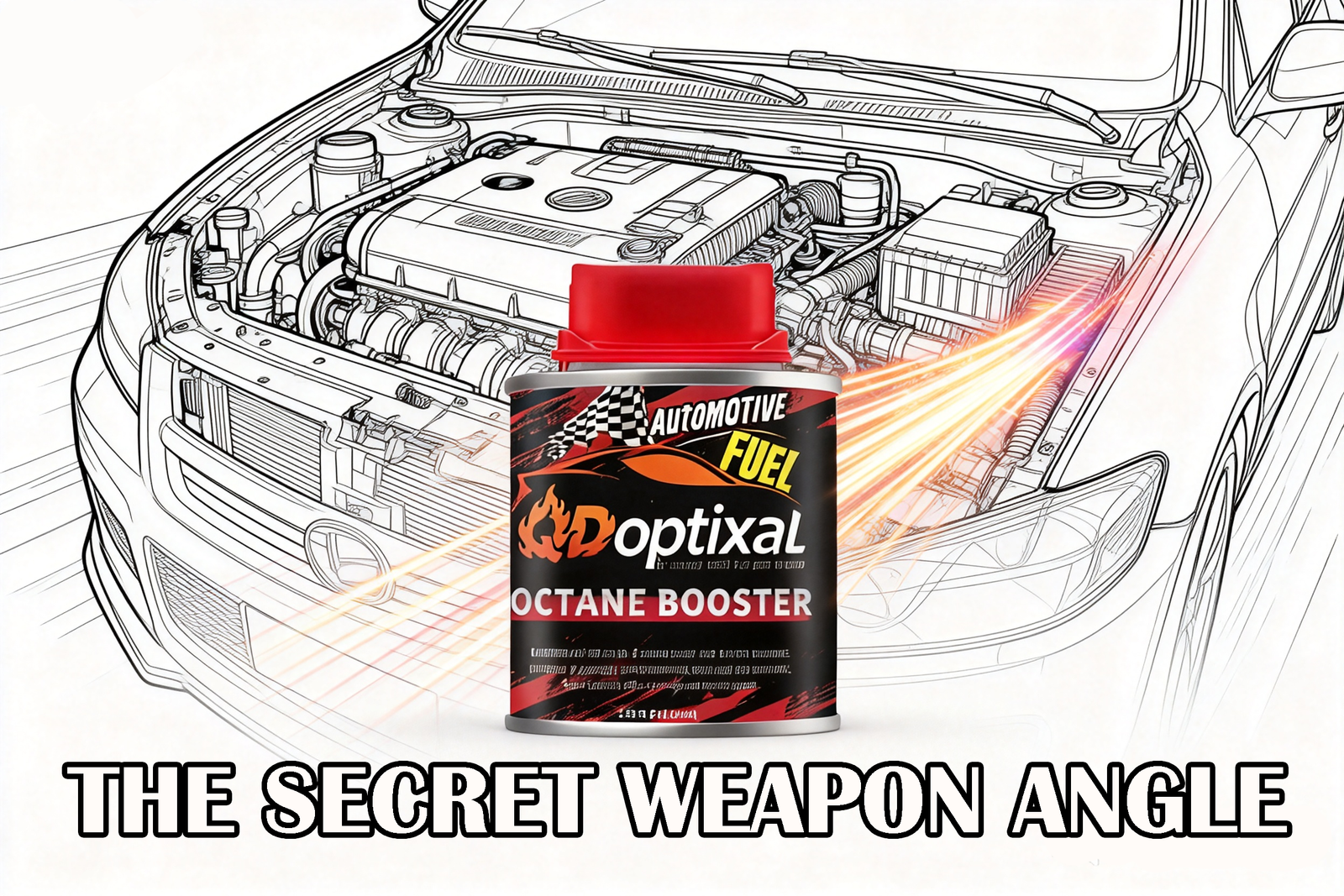
Tucked away in your glovebox, right next to the manuals you never read, there is space for a tiny yet mighty guardian for your engine. This secret weapon is a 100ml bottle of high-quality octane booster, a concentrated formula that holds the key to unlocking smoother performance and providing essential protection for your car. Far from being a niche product for race cars, this modern octane booster is a smart and effortless upgrade for any daily driver, designed to actively clean and shield your engine’s most vital components with every tank of fuel.
The magic lies in its sophisticated chemical engineering. A premium octane booster does more than increase the octane rating of your fuel to prevent knocking and pinging. Its true heroism comes from a blend of potent detergents and lubrication agents that work continuously. These ingredients meticulously clean fuel injectors and intake valves, ensuring a perfect fuel spray pattern and optimal airflow. This process removes harmful carbon deposits before they can build up, directly leading to more complete combustion, restored horsepower, and a noticeable improvement in throttle response and smoothness.
By promoting cleaner and more efficient combustion, this glovebox hero tackles engine problems at their source. Over time, fuel injectors clog, and intake valves become coated with carbon deposits, resulting in a rough idle, reduced power, and wasted fuel. This formulation actively cleans critical fuel system and intake components, restoring proper fuel spray patterns and airflow. The result is more complete combustion, which can restore lost performance and improve throttle response. With consistent use, it helps your engine run smoothly, operate at its intended efficiency, and truly purr like a kitten, all thanks to a single small bottle that serves as your vehicle’s simplest yet most profound upgrade.
What’s Really Going On Inside Your Engine?
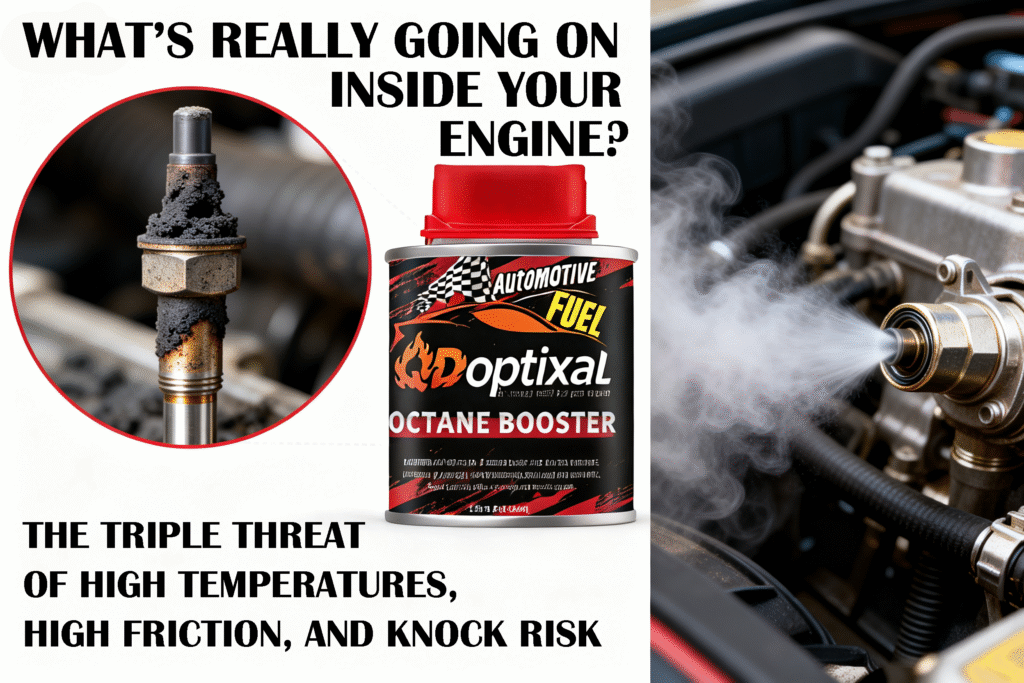
Your engine is a masterpiece of modern engineering, a symphony of precisely moving parts. Pistons fire thousands of times a minute, valves open and close in perfect timing, and all of this happens within a chamber of controlled explosions. However, this intense activity creates an environment of extreme stress, heat, and pressure that constantly challenges the components. Despite your best care with regular oil changes, this internal world faces threats that everyday maintenance cannot fully address.
One of the most significant threats is a phenomenon known as engine knock or ping. This occurs when fuel ignites unevenly or too early in the combustion cycle. Instead of a smooth, controlled push on the piston, you get multiple erratic shockwaves. These shockwaves create a distinct pinging sound and, more importantly, deliver violent blows to your piston crowns, cylinder walls, and connecting rod bearings. It is essentially like hitting these critical components with a tiny hammer thousands of times per minute.
Alongside knock, relentless friction is a constant enemy. Even with a film of oil separating them, metal surfaces like piston rings against cylinder walls are in a perpetual state of microscopic contact. Over time, this contact wears down the metal, creating fine particles that circulate and further accelerate wear. This friction robs your engine of power, converts precious energy into waste heat, and gradually degrades the tolerances that keep your engine running efficiently and smoothly.
The intense heat generated by combustion and friction also takes a toll on your engine oil, its vital lifeblood. High temperatures break down the oil’s molecular structure, causing it to thin out and lose its protective viscosity. Simultaneously, incomplete combustion creates soot and acidic byproducts that contaminate the oil. This dual assault of thermal breakdown and contamination means your oil loses its ability to lubricate, cool, and clean long before its scheduled change interval, leaving parts vulnerable.
All of these issues are compounded under stress. Every day driving conditions like accelerating onto a highway, climbing a steep hill, or carrying a heavy load push engine temperature and pressure even higher. This perfect storm of increased heat, heightened friction, and a higher risk of knock accelerates wear exponentially. The result over time is not just a gradual loss of performance and fuel economy, but also the potential for costly mechanical failures. Understanding this hidden internal battle is the first step toward providing your engine with the advanced protection it truly needs.
The Hidden Cost of Engine Knock and Ping
Engine knock and ping are often dismissed as minor, harmless noises. Many drivers might hear a light rattling sound during acceleration or while climbing a hill and assume it is a normal characteristic of their engine working hard. This misconception is where the true danger lies, as these sounds are direct audio evidence of a destructive process occurring inside the combustion chamber. What you are hearing is the improper and uncontrolled explosion of the air-fuel mixture, which creates damaging shockwaves.
The immediate mechanical cost of these shockwaves is severe and cumulative. Each knock event subjects engine components like pistons, rings, and connecting rod bearings to extreme, localized pressure spikes. This force is significantly higher than the pressure from a normal, controlled combustion event. Over time, this repetitive hammering causes physical damage. It can erode piston crowns, score cylinder walls, and accelerate the wear on bearing surfaces. This mechanical degradation quietly reduces engine efficiency, compromises power output, and shortens the overall lifespan of critical parts.
The hidden financial cost extends far beyond potential engine repair bills. An engine suffering from knock cannot operate efficiently. The erratic combustion process wastes fuel, directly reducing your miles per gallon and costing you more at the pump over time. Furthermore, the increased stress and heat from knocking force the engine management computer to protect the engine by retarding ignition timing. This safety move further reduces power and fuel economy. Therefore, the expense of engine knock is not a future possibility. It is a continuous drain on performance and your wallet, occurring with every tank of fuel that does not meet your engine’s octane requirements for clean, controlled combustion.
Friction: The Silent Engine Killer
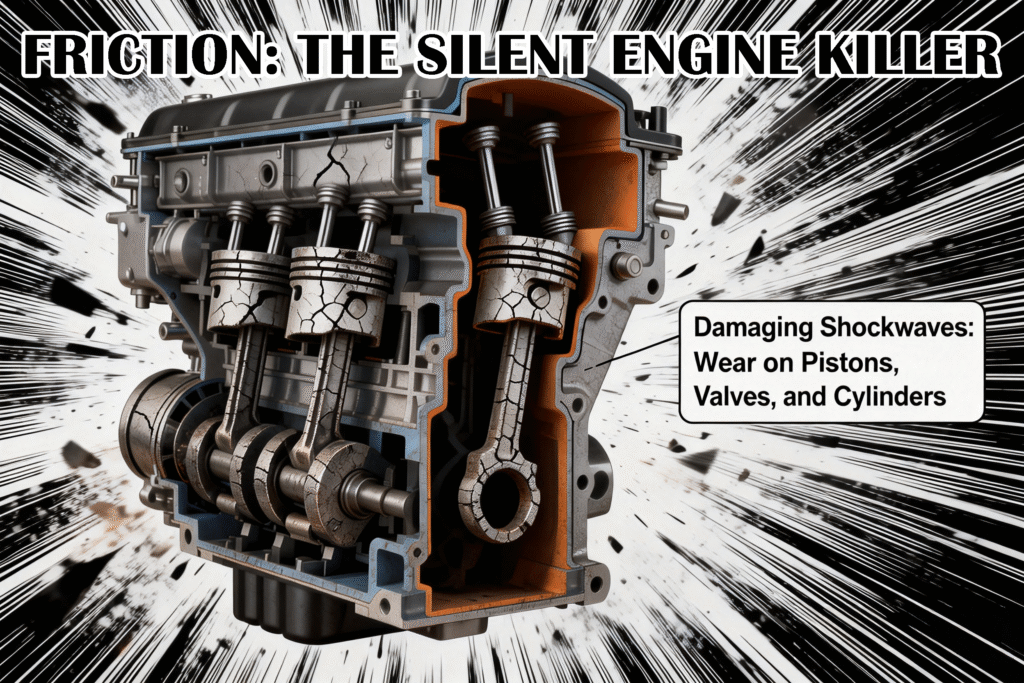
Friction is the relentless, unseen force that wages a constant war within your engine’s moving parts. Even with a protective layer of engine oil, metal surfaces such as piston rings against cylinder walls, bearings on rotating shafts, and valve train components are in a state of perpetual microscopic contact. This contact generates resistance every single time parts move, a fundamental physical process that transforms smooth mechanical motion into wasted energy in the form of heat and gradual material loss.
The consequences of uncontrolled friction are twofold and destructive. First, it directly shears away microscopic particles of metal from component surfaces. These particles then circulate within the oil, acting as abrasive agents that further accelerate wear in a vicious cycle, much like sandpaper slowly grinding down precision machinery. Second, the energy lost to friction is converted into excessive heat, raising the operating temperature of the engine beyond its ideal range. This additional heat stresses engine components and further degrades the engine oil’s protective properties, thinning it and reducing its ability to maintain a proper lubricating film.
What makes friction particularly insidious is its silent, gradual nature. Unlike engine knock, which announces itself with sound, friction works quietly in the background. There is no dramatic warning signal. The damage accumulates incrementally over thousands of miles, manifesting only later as a gradual loss of engine power, decreased fuel efficiency as the engine works harder to overcome internal resistance, and eventually, increased oil consumption or clear mechanical wear. By the time symptoms become noticeable, significant and often costly internal degradation has already occurred.
Why Stress and Heat Are Your Oil’s Worst Enemies
Engine oil is the vital lifeblood of your engine, tasked with the critical duties of lubrication, cooling, and cleaning. However, the very environment it works in is defined by extreme stress and intense heat, which wage a continuous campaign to break down its protective properties. High operational temperatures, especially during demanding driving conditions, attack the oil’s molecular structure. This thermal breakdown, known as oxidation, causes the oil to chemically degrade. It thickens into sludge or, conversely, thins out, losing the stable viscosity that is essential for maintaining a protective film between moving metal parts.
Beyond thermal breakdown, mechanical stress from high engine loads and rpm shears the oil molecules. This shear force, the same type of force that slowly tears a sheet of paper when pulled from both ends, physically reduces the oil’s ability to resist thinning under pressure. When oil shears down, its film strength weakens, allowing metal surfaces to come closer together and increasing the risk of wear. Simultaneously, the stress of incomplete combustion creates soot particles and acidic byproducts. These contaminants are suspended in the oil, turning it from a clean lubricant into an abrasive, corrosive slurry that accelerates component wear and corrodes sensitive bearing surfaces.
The culmination of these attacks is a premature failure of the oil’s core functions. It can no longer effectively lubricate, leading to increased friction and heat. Its diminished thermal stability reduces its capacity to carry heat away from critical components like piston rings and bearings. Finally, its saturated load of contaminants means it can no longer keep engines clean, allowing deposits to form. This means that even if you follow a strict oil change interval, the oil protecting your engine may have lost its effectiveness hundreds of miles earlier, leaving your engine vulnerable during the very moments it needs protection the most.
Introducing Your 100ML Guardian: QDoptixal’s Octane Booster
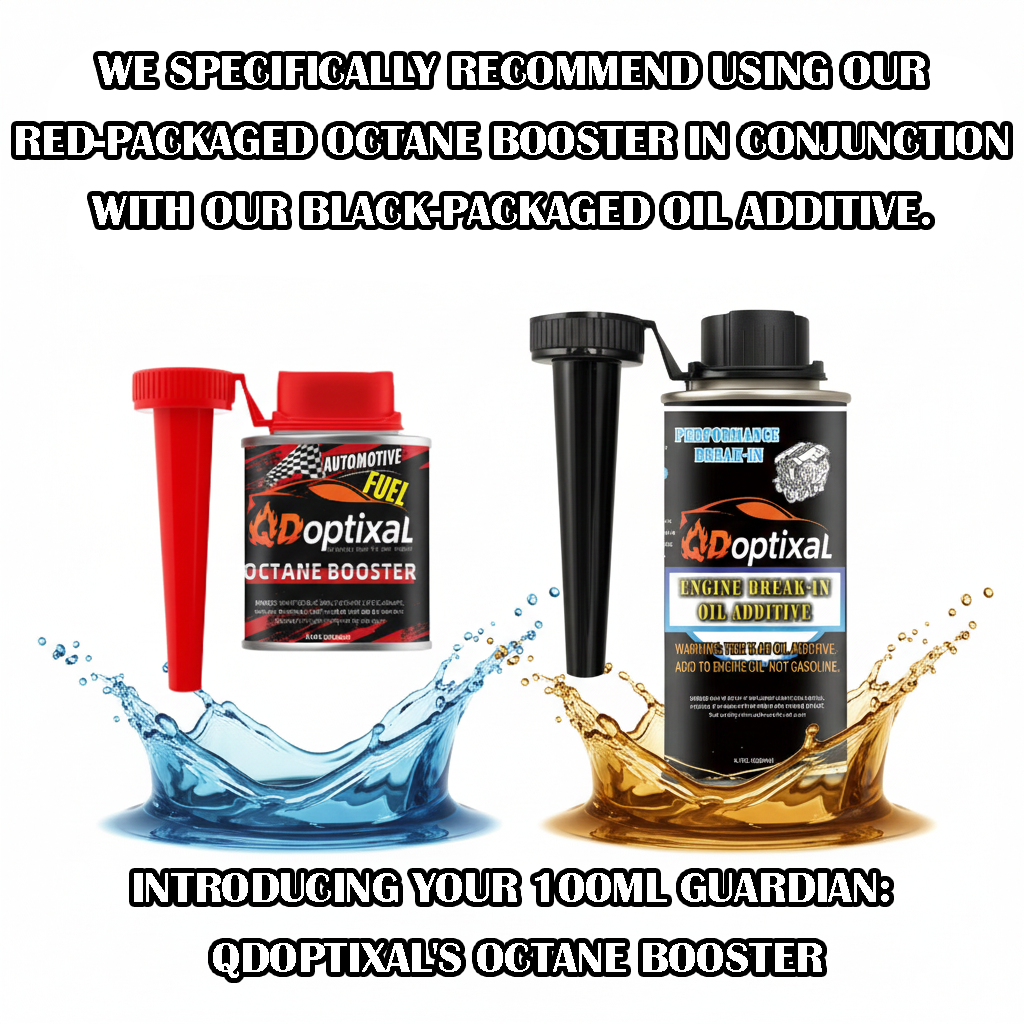
Introducing Your 100ML Guardian: QDoptixal’s Octane Booster. This powerful, concentrated formula is engineered as the definitive solution for the disruptive engine knocking and pinging described in your vehicle’s symptoms. When your engine’s air-fuel mixture detonates unevenly under pressure, it creates those harmful knocking sounds that signal both lost performance and potential long-term damage. This 100ml guardian directly confronts that issue, scientifically recalibrating your fuel’s combustion characteristics to resist premature ignition and restore smooth, controlled power delivery.
It is crucial to understand the specific role of this red-packaged octane booster. Its primary function is to elevate the octane rating of your fuel, which raises the fuel’s resistance to early detonation and eliminates knocking. By stopping this irregular combustion, the booster allows your engine to run as designed, safely utilizing advanced ignition timing and higher compression. This restoration of optimal combustion is what unlocks enhanced power output and improved fuel economy, letting your engine perform efficiently without the stressful racket of knock.
However, for a complete resolution to the noises and concerns you’re experiencing, a dual approach is essential. The knocking may be the most audible symptom, but the friction and mechanical wear you hear are often a separate, interrelated issue. This is why we specifically recommend using our red-packaged octane booster in conjunction with our black-packaged oil additive. The octane booster quiets the combustion knock, while the oil additive addresses the physical friction on components like piston rings and cylinder walls. Together, they form a comprehensive repair strategy.
If used independently, the 100ml octane booster will still provide significant benefits. On its own, it will effectively increase your fuel’s octane level to match your engine’s requirements, leading to a noticeable boost in power responsiveness and maximising your fuel efficiency. It is a superb performance enhancer and a preventative measure against knock-related stress. Yet, for the persistent mechanical friction noises that originate from engine wear, the oil additive remains the necessary counterpart.
Therefore, to fully silence the knock and protect your engine from the root causes of wear, the combined application of both QDoptixal formulas is the prescribed solution. Use your 100ml Guardian the octane booster to perfect the combustion process and reclaim your engine’s power. Then, deploy its companion oil additive to fortify your engine’s internal defence against friction. Follow this complete protocol to ensure your engine not only runs quietly and powerfully but is also guarded against future wear for the long journey ahead.
Conclusion
Ultimately, the journey of engine care is about choosing to be proactive rather than reactive. The hidden costs of knock, the silent grind of friction, and the relentless breakdown caused by heat and stress are not future possibilities. They are current realities in every engine’s operation. Acknowledging these forces is the first step toward intelligent vehicle ownership, moving beyond basic maintenance to active protection.
QDoptixal’s 100ML Octane Booster, your designated engine guardian, represents this precise step. It is a concentrated solution formulated to intervene directly at the source of these problems. By stabilizing combustion to prevent knock, depositing protective layers to combat friction, and promoting cleaner operation to preserve oil integrity, it addresses the root causes of wear and performance loss. This multi-action approach offers a shield for your engine’s longevity that conventional oil changes alone cannot provide.
Therefore, the smartest upgrade for your car may not require a mechanic or a large investment. It begins with a single, simple action. Integrating this powerful 100ml guardian into your routine, especially before demanding drives or as a regular treatment, transforms you from a passive driver into an informed protector of your vehicle. It is an affordable pledge to preserve your engine’s power, efficiency, and health for the long road ahead. Choose to protect your investment decisively.
Frequently Asked Questions
1. Is this octane booster safe for my modern car with sensitive sensors and a catalytic converter?
Yes, it is completely safe. QDoptixal’s Octane Booster is specifically formulated to be compatible with all modern engine components. It contains no harsh metals like lead or manganese that can harm oxygen sensors or damage the catalytic converter. Its advanced chemistry is designed to enhance combustion cleanly and protect engine parts without risking damage to your vehicle’s vital emissions control systems.
2. How often should I use the 100ML Octane Booster in my car?
For optimal ongoing protection and performance, we recommend using one 100ML bottle with every full tank of fuel. This consistent use maintains higher fuel stability, continuously reduces friction, and keeps your engine running cleanly. It is also highly beneficial to use a bottle prior to any anticipated high-stress situation, such as a long road trip, towing, or driving in extremely hot weather, to provide maximum protection during those critical times.
3. Why is the product only 100ML? Is that enough for a full tank of gas?
Absolutely. The 100ML volume is not a limitation but a precision-engineered advantage. This size represents a highly concentrated formula where every millilitre is potent. One bottle is the scientifically calculated, correct dosage to treat a standard fuel tank (typically 8.5 gallons) optimally. This eliminates measurement guesswork, prevents waste, and ensures you are applying the exact amount needed for effective protection, making it both powerful and conveniently glovebox-sized.