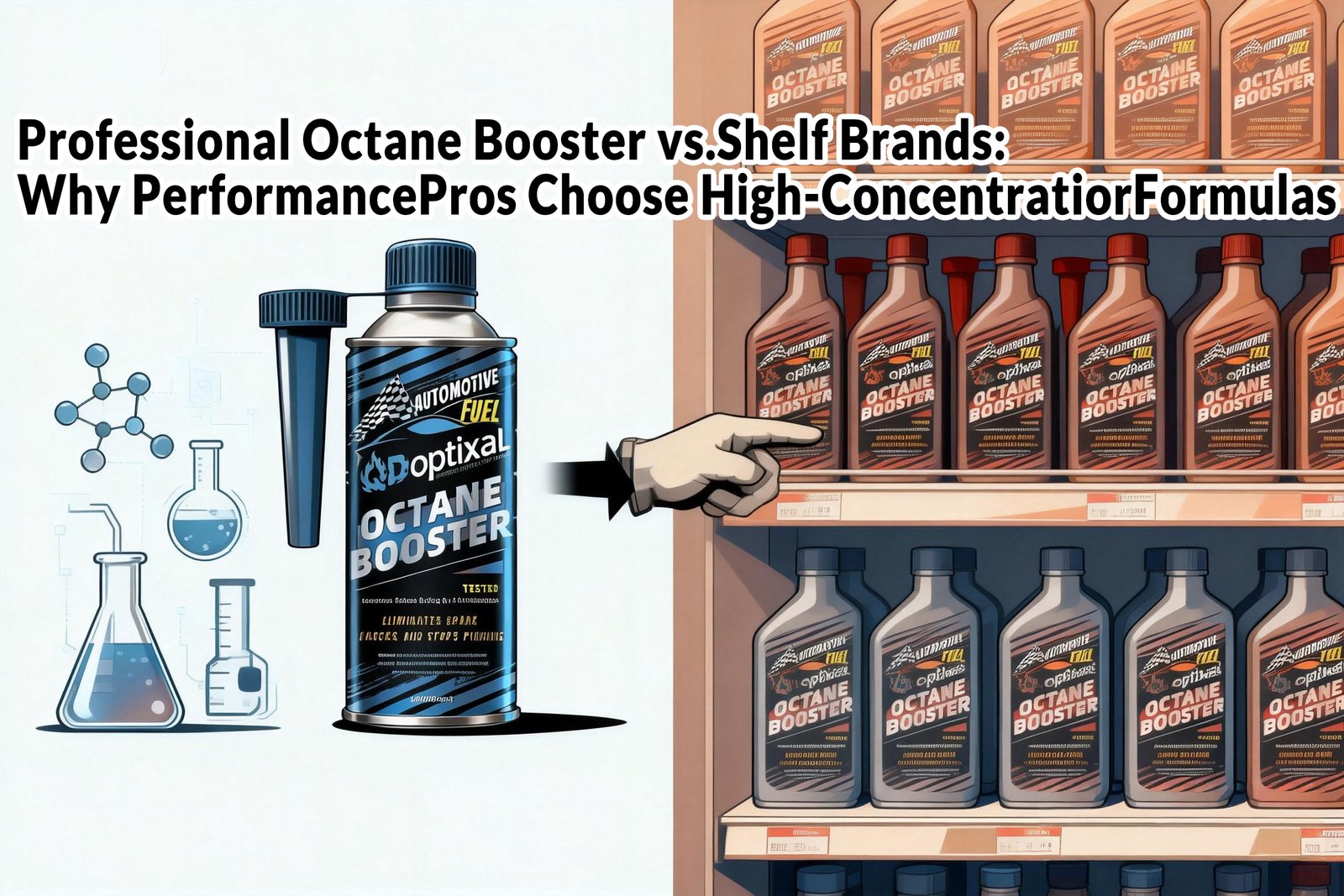
The world of octane boosters is divided into two distinct categories: the brightly colored bottles on the retail shelf and the professional-grade formulas favoured by mechanics, tuners, and serious enthusiasts. While both promise increased octane and better performance, the difference in their effectiveness is not merely a matter of marketing but of fundamental chemical engineering. Choosing between them is the choice between a minor supplement and a potent performance tool, with significant implications for engine safety and power output.
Shelf brands, widely available at auto parts stores, are often formulated to be cost-effective and safe for a very broad audience. This typically results in formulas that are heavily diluted with carrier solvents and contain only a small percentage of active octane-enhancing compounds. Their primary aim is to offer a modest, safe bump, often just 1 to 3 octane points per the entire tank and may include detergents or other additives to provide a generalised “clean-up” benefit. For very mild applications or older engines experiencing slight ping on hot days, they can provide a marginal assist. However, for the demanding environments of modified, high-compression, turbocharged, or tracked engines, their diluted nature renders them largely ineffective at solving real knock problems or enabling significant performance gains.
Professional-grade, high-concentration octane boosters are engineered for results, not just shelf appeal. They contain a significantly higher volume of potent active ingredients, such as advanced oxygenates or refined aromatic compounds like toluene and xylene. These concentrated formulas are designed to deliver substantial octane increases, often 5 to 7 points or more per tank, making them a true functional component of a performance setup. For professionals, this potency is non-negotiable; it provides the necessary headroom to safely advance ignition timing, increase boost pressure, or prevent detonation under extreme load, thereby unlocking horsepower that is literally held back by fuel quality. This blog will delve into the science behind these formulas, the economics of cost-per-octane-point, and the tangible reasons why those who depend on their engines never settle for a watered-down solution.
The Difference Between Professional-Grade and Retail Additives.
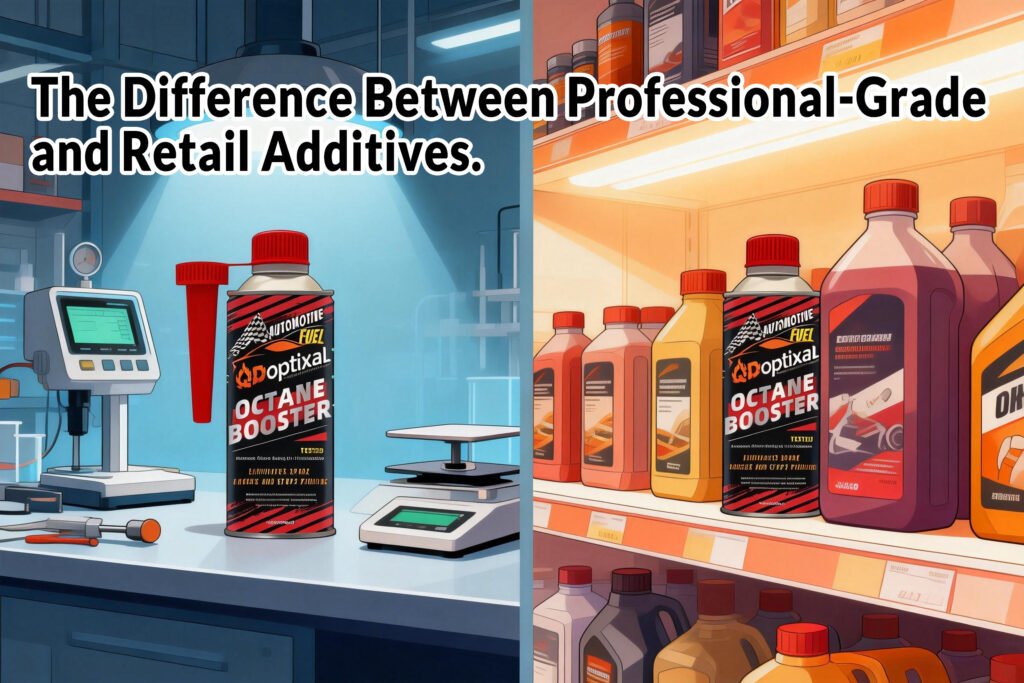
The distinction between professional-grade and retail additives begins with their fundamental purpose and design philosophy. Retail additives, found on the shelves of auto parts stores and supermarkets, are engineered for broad consumer appeal, simplicity, and safety across a vast, undefined range of vehicles. Their primary goal is often to provide a general, perceived benefit like “cleaning” or “boosting” with minimal risk of harming any engine, even if misused. In contrast, professional-grade additives are developed with a specific, technical outcome in mind, such as resolving a particular type of deposit, providing a measurable octane increase, or protecting a specific component under extreme stress. They are tools designed for a known problem, not general wellness tonics for the mass market.
This divergence in purpose is most evident in the concentration and composition of active ingredients. Retail formulas are frequently diluted with large amounts of carrier solvents or bulk fluids to keep unit costs low and volume high, resulting in a small percentage of active chemistry per bottle. A consumer fuel injector cleaner might contain a minuscule amount of detergent. A professional-grade equivalent will boast a highly concentrated dose of advanced, targeted chemistries like high concentrations of Polyether Amine (PEA) detergents or potent combustion catalysts. The professional product delivers a more active solution per millilitre, requiring less total product to achieve a definitive, measurable result, which is crucial for commercial or high-stakes applications.
The intended use case and user expertise further separate these categories. Retail additives assume a user with little technical knowledge; instructions are simple (“pour in one bottle before filling up”), and marketing leans on vague promises. They are designed for preventative maintenance or mild issues in otherwise stock, daily-driver vehicles. Professional-grade products, however, are built for knowledgeable users, mechanics, fleet managers, and performance enthusiasts who can diagnose a specific issue. These products may come with detailed technical data sheets (TDS), recommend precise dosing ratios based on fuel volume or problem severity, and are often integral to solving acute problems in high-performance, heavily utilised, or modified engines where generic solutions fail.
The economic model, or price versus value, is also interpreted differently. A retail additive’s low upfront cost is a key selling point, but its diluted nature often means the cost per unit of actual active ingredient is high, and the performance result may be subtle or immeasurable. The professional-grade product typically commands a significantly higher initial price. However, because it is concentrated and effective, a smaller quantity is needed per treatment. For the professional user, the true value is measured in outcomes: the cost of the additive versus the labour hours saved fixing a clogged injector, the horsepower reliably gained on a dyno, or the prevention of a catastrophic engine failure from knock. The investment is in a result, not just a product.
Ultimately, the choice is not that one category is universally “better” than the other, but that they serve different masters with different needs. A retail additive can be a suitable choice for a consumer seeking simple, low-risk preventative maintenance for a standard commuter car. It represents a low-commitment, accessible option. A professional-grade additive is a necessary, precision tool when the application is demanding, the problem is specific, and the cost of failure is high. Understanding this difference between a generalised, consumer-friendly formula and a concentrated, results-driven technical solution empowers users to move beyond marketing and select the product that truly aligns with their vehicle’s requirements and their own performance or maintenance goals.
Understanding Concentration Levels: Points vs. Numbers
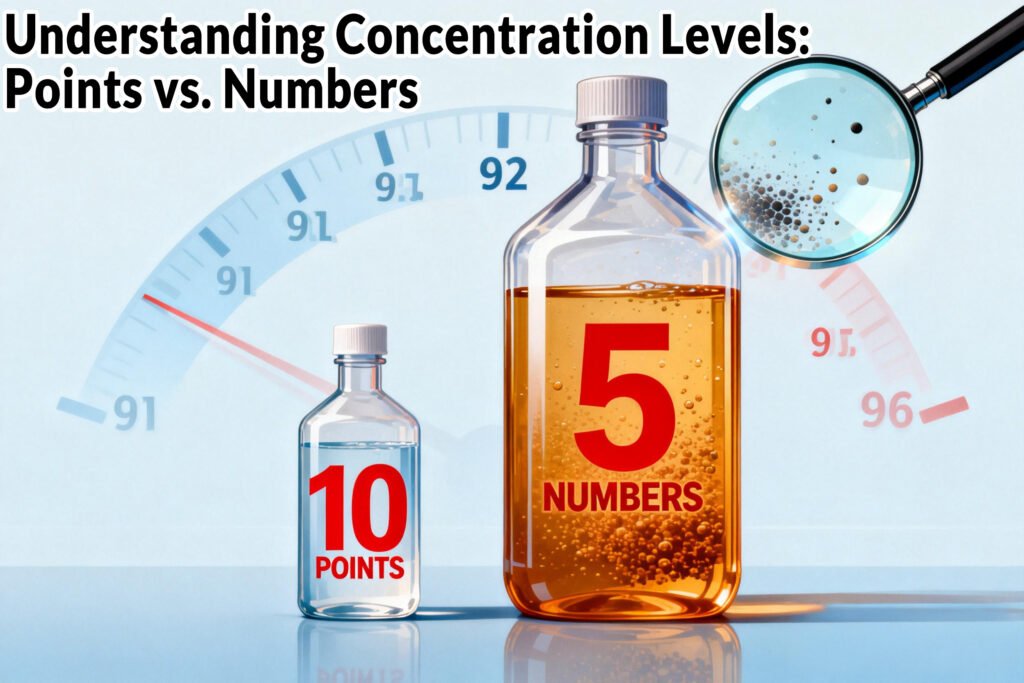
A critical and often misunderstood aspect of selecting an octane booster is deciphering the language of its promised increase. The confusion between octane points and octane numbers is a fundamental distinction that separates marketing hyperbole from genuine performance specification. Understanding this difference is essential to evaluating a product’s true potency and setting realistic expectations for its effect on your fuel.
The term octane points refers to a tenth of a full octane number on the standard (R+M)/2 scale used at the pump. An advertisement claiming a booster raises fuel by 5 points means it increases the octane rating by 0.5. For example, if you begin with 91 octane fuel, a 5 point booster aims to result in 91.5 octane. This is a modest increase. In contrast, a claim of increasing by 5 numbers means a full five octane rating jump, transforming 91 octane fuel to 96. This is a substantial and powerful change. Retail shelf products almost universally advertise in points, as the larger figure sounds more impressive to a casual buyer unaware of the distinction.
The mathematics behind this reveals why concentration is paramount. To raise a typical 15-gallon fuel tank by a single, full octane number requires a significant volume of active chemical compound. Diluted, retail-grade boosters simply do not contain enough active ingredient to achieve this. They may promise seven, eight, or ten points, which equates to less than a single full number increase. A professional formula, by contrast, is concentrated enough to deliver multiple full octane numbers of increase, often requiring a smaller physical volume of product to do so because it contains a higher purity and density of active ingredients.
This distinction directly impacts performance and engine safety. A gain of two or three octane points, or 0.2 to 0.3 numbers, is often within the margin of error for fuel blends and will provide no perceptible knock suppression in a tuned or high-strung engine. To safely advance timing or increase boost pressure, a tuner needs a predictable and significant buffer, typically measured in full octane numbers. Using a booster that deals in points may create a false sense of security, as the actual anti-knock improvement is minuscule, leaving the engine still vulnerable to detonation under load.
Therefore, interpreting product labels with a discerning eye is a key skill. Always look for the specific wording and check for technical data sheets. A legitimate professional product will typically state its capability in clear terms, such as raises octane by up to 6 numbers. If a label only boasts about points without clear context, it is a strong indicator of a diluted formula designed for the casual consumer. For any serious application where fuel stability is non-negotiable, your focus should be exclusively on products that quantify their results in full octane numbers, as this is the true measure of a booster’s concentrated power and its ability to protect your engine.
Benefits of Performance Octane Boosters in Turbocharged Engines.
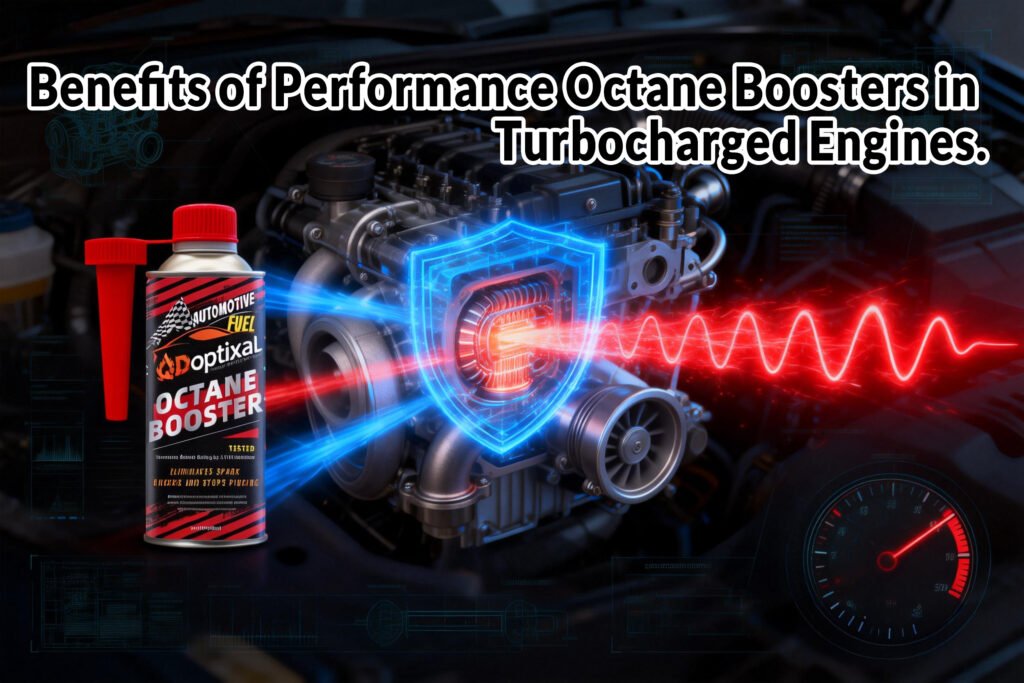
Turbocharged engines operate under uniquely stressful conditions that make them primary beneficiaries of performance octane boosters. The fundamental role of a turbocharger is to force more air into the combustion chamber, thereby creating a denser air-fuel charge. This forced induction dramatically increases cylinder pressure and temperature before and during combustion. These elevated pressures and temperatures significantly raise the engine’s susceptibility to knock, which is the uncontrolled, early ignition of the fuel mixture. A high-concentration octane booster directly combats this by increasing the fuel’s knock resistance, allowing it to burn in a controlled manner despite the extreme environment created by forced induction.
The most direct benefit is the reliable prevention of detonation, which is the single greatest threat to a turbocharged engine’s longevity. Knock in a turbo engine is not merely an audible nuisance; it represents violent pressure spikes that can cause immediate physical damage. These spikes can crack piston rings, damage ring lands, erode piston crowns, and even lead to catastrophic piston or rod failure. By raising the effective octane level of the fuel, a performance booster raises the threshold at which knock occurs. This provides a critical safety margin, especially under high boost conditions, during aggressive acceleration, or in hot ambient temperatures, ensuring the engine operates within its designed mechanical limits.
A direct corollary to knock prevention is the enablement of optimal ignition timing. Modern engine control units are programmed to retard ignition timing at the first sign of knock to protect the engine. This safety reaction, however, sacrifices power and efficiency. When a high-octane booster is used, the ECU can maintain more advanced timing because the fuel is less prone to pre-ignition. More advanced timing allows the combustion pressure to push down on the piston more effectively throughout the power stroke, translating directly to increased torque and horsepower. This allows the turbocharged engine to fully realise its performance potential that would otherwise be limited by the knock sensor’s intervention on pump fuel alone.
Performance octane boosters also contribute to better heat management within the combustion chamber. Detonation itself generates excessive and localized heat, but even normal combustion in a turbo engine produces significant thermal loads. High-quality boosters promote a smoother, more complete, and faster burn. This efficiency helps reduce the peak combustion temperatures and can mitigate the risk of pre-ignition caused by hot spots on cylinder components, such as exhaust valves or piston edges. A cooler, more controlled burn reduces thermal stress on all internal components, contributing to greater engine reliability during sustained performance driving or towing.
Finally, the use of a performance octane booster ensures consistency, which is vital for tuned or modified turbocharged vehicles. Pump fuel octane can vary from station to station and season to season. This inconsistency can cause unpredictable performance and force conservative tuning. Adding a measured dose of a potent octane booster standardizes the fuel’s knock resistance, creating a uniform and predictable chemical environment for combustion. This consistency allows enthusiasts and tuners to extract maximum, repeatable performance with confidence, whether on a dyno, at a track day, or during spirited driving, knowing the fuel’s protective qualities are no longer a variable.
Conclusion
In navigating the specialised world of octane boosters, the critical lesson is that not all additives are created equal. The fundamental divide between professionally engineered, high-concentration formulas and broadly marketed retail products is defined by their purpose, potency, and the results they deliver. For the casual driver, a retail product may offer a placebo of maintenance, but for those with performance engines, especially forced-induction systems, the precise chemistry and measurable octane increase of a professional-grade booster are non-negotiable tools for engine safety and power realisation.
Understanding the technical language, particularly the crucial difference between octane points and full numbers, empowers you to see past marketing and evaluate true potency. This knowledge, combined with a clear grasp of how turbocharged and high-performance engines operate under extreme pressure, clarifies why a diluted solution simply cannot provide the necessary knock suppression and thermal management. Investing in a concentrated formula is ultimately an investment in protecting your engine’s integrity and unlocking the consistent performance engineered into it.
Therefore, the choice becomes clear. For standard daily driving on pump fuel, specialised additives may be an optional supplement. However, for tuned vehicles, tracked cars, turbocharged engines, and any application where demands exceed the capabilities of standard fuel, a professional octane booster transitions from an optional product to an essential component of a responsible performance strategy. It is the key to creating a stable, high-octane foundation that allows modern engine management systems to operate optimally, ensuring both power and protection.
Frequently Asked Questions (FAQs)
1. Is an octane booster necessary if I already use premium (91 or 93 octane) fuel?
It can be, depending on your engine and its use. Stock engines running on their manufacturer-recommended premium fuel typically do not need a booster. However, if your engine is modified (e.g., tuned for more boost or advanced timing), used exclusively on a racetrack, or experiences knock even on premium fuel, then a high-concentration octane booster is necessary to provide the additional knock resistance the factory fuel cannot offer.
2. Can using an octane booster damage my engine or oxygen sensors?
Low-quality boosters that use heavy metal compounds or excessive solvents can potentially foul spark plugs and damage oxygen sensors or catalytic converters over time. High-quality, professional-grade boosters from reputable brands are formulated with cleaner-burning chemistries designed to be safe for modern emission control systems when used as directed. Always research the specific additive’s ingredients and certifications.
3. Should I use an octane booster with every tank of fuel?
For consistent performance and protection in a high-performance or turbocharged application, especially one that is tuned for the higher octane, yes, using it with every tank is recommended to maintain a stable fuel chemistry. For occasional use, such as sporadic track days or towing in hot weather, it can be used situationally. Using a booster only intermittently in a tuned engine may cause the engine control unit to constantly adjust timing, leading to inconsistent performance.