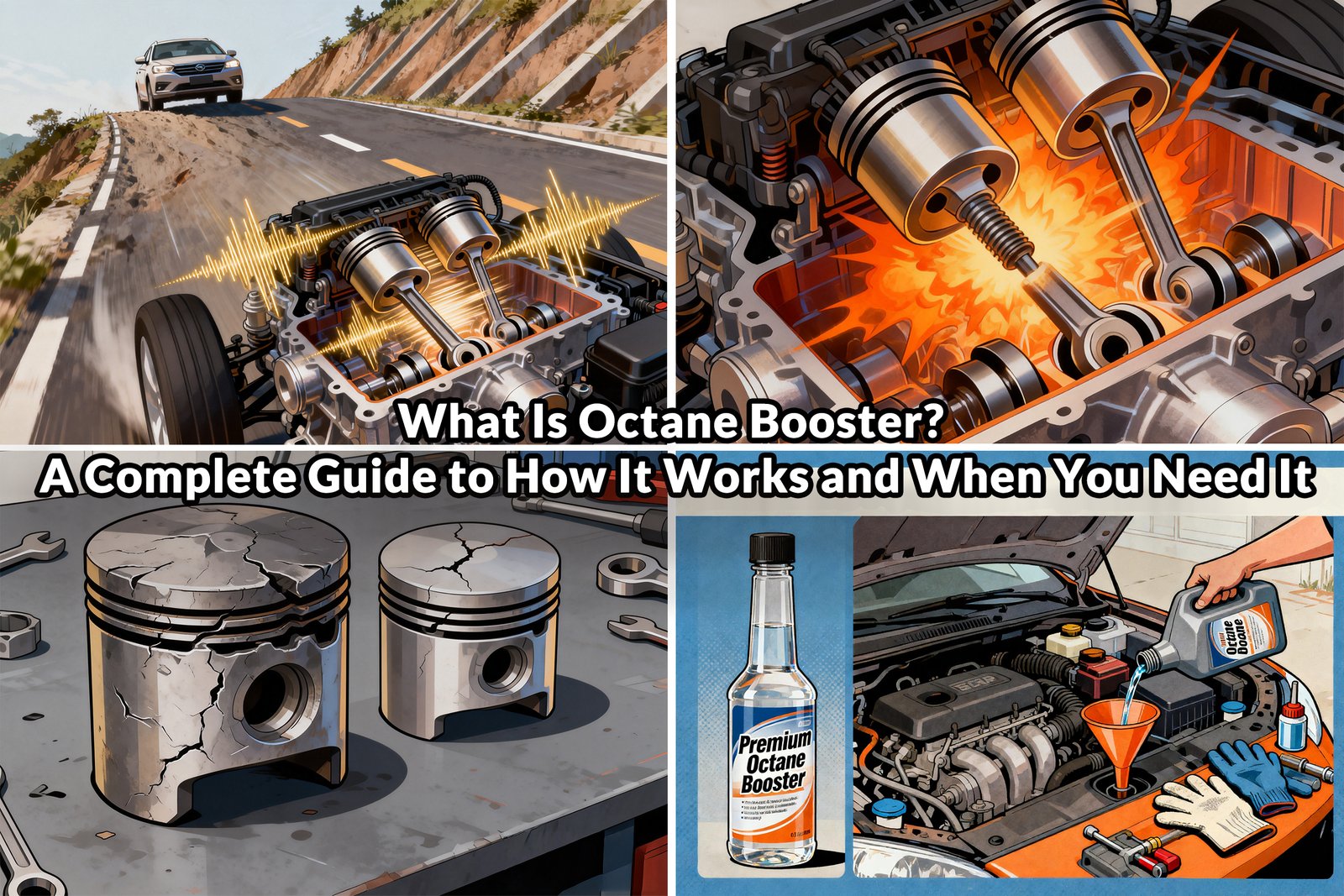
Ever wondered what an octane booster actually is? In simple terms, an octane booster is a chemical additive designed to increase the octane rating of your gasoline. A higher octane rating means fuel is more resistant to premature detonation, often called “knocking” or “pinging.” This makes octane booster a crucial tool for certain engines to run smoothly and efficiently.
This knocking occurs when fuel combusts unevenly under pressure, which can lead to reduced engine power, poor fuel economy, and even long-term damage. High-performance engines, turbocharged cars, or older vehicles running on modern fuel often have higher octane requirements. When the fuel at the pump falls short, that’s where a quality additive steps in.
But is it right for your car, and how do you use it correctly? Understanding the mechanics behind octane boosters, their key ingredients, and the specific situations that call for them can help you make an informed decision. This complete guide will walk you through everything from the science of how it works to clear signs you might need it.
What Exactly is an Octane Booster?
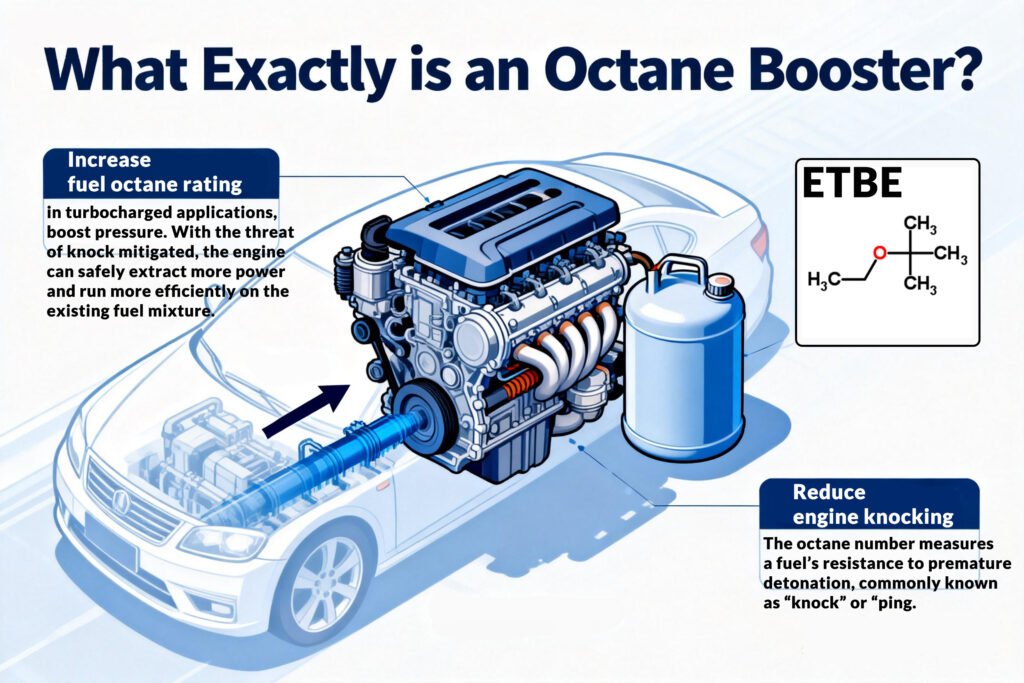
An octane booster is a concentrated liquid fuel additive designed to raise the octane rating of gasoline. The octane number measures a fuel’s resistance to premature detonation, commonly known as “knock” or “ping.” When low-octane fuel combusts unevenly under high pressure and temperature inside an engine’s cylinder, it creates harmful shockwaves. An octane booster works by altering the fuel’s combustion characteristics, making it burn more smoothly and resist this untimely ignition, thereby allowing engines to operate as intended without compromise.
The primary mechanism involves chemical compounds that have a higher natural resistance to auto-ignition than standard gasoline hydrocarbons. When mixed into your fuel tank, these compounds effectively raise the overall threshold at which knock occurs. This allows the engine’s computer (ECU) to optimize performance parameters like ignition timing and, in turbocharged applications, boost pressure. With the threat of knock mitigated, the engine can safely extract more power and run more efficiently on the existing fuel mixture.
It’s crucial to distinguish true octane boosters from general fuel system cleaners or injector cleaners. While many products combine functions, a dedicated octane booster’s primary job is to elevate octane, not just clean. The concentration and potency of these active ingredients determine how many “points” the octane rating is increased, with a “point” representing a 0.1 rise in octane number.
You typically need an octane booster in specific scenarios. It is most beneficial for high-compression or forced-induction (turbo/supercharged) engines that require premium fuel but only have access to lower-octane gasoline. It’s also useful for classic cars whose engines were designed for leaded, high-octane fuel that is no longer available, or when experiencing persistent knock due to carbon buildup or hot weather conditions. For a standard modern car that runs perfectly fine on regular unleaded, an octane booster is usually an unnecessary expense.
Ultimately, an octane booster is a targeted tool, not a universal performance enhancer. It solves a specific problem fuel knock by chemically upgrading your gasoline’s stability. It is not a magic potion that will dramatically increase horsepower in an engine already tuned for the fuel it’s using. Instead, it restores and protects performance by enabling an engine to run safely at its designed parameters, acting as a bridge when the right fuel is unavailable.
The Science: How Does Octane Booster Work Inside Your Engine?
The core battle an octane booster fights is against premature detonation, scientifically known as auto-ignition or “knock.” Under the intense heat and pressure of an engine’s compression stroke, the air-fuel mixture can spontaneously ignite before the spark plug fires. This rogue explosion collides violently with the intended, spark-initiated flame front, creating damaging shockwaves that sound like a metallic pinging. An octane booster’s entire function is to raise the temperature and pressure threshold at which this unwanted auto-ignition occurs, giving the spark plug full control over combustion timing.
Chemically, octane boosters achieve this by introducing compounds with a more robust molecular structure and higher activation energy. Their tightly bonded carbon rings are far more resistant to breaking down under heat and pressure compared to the simpler hydrocarbon chains in regular gasoline. When blended into your fuel, these additives act as a stabilizing agent, effectively “cooling” the fuel mixture’s tendency to ignite spontaneously and slowing down the initial stages of the combustion reaction.
This chemical stabilization has a direct and positive impact on your engine’s brain—the Engine Control Unit (ECU). Modern engines have knock sensors that listen for the telltale sound of detonation. When knock is detected, the ECU reacts defensively by retarding ignition timing (sparking the plug later) and, in turbocharged engines, reducing boost pressure. This protects the engine but sacrifices power and efficiency. With an octane booster stabilizing combustion and eliminating knock, the ECU can safely advance timing back to its optimal, performance-oriented map, allowing for more complete burning of the air-fuel charge.
The result is a cleaner, more powerful, and more efficient explosion. With the spark occurring at the ideal moment, the flame front propagates smoothly and completely across the cylinder. This ensures maximum force is applied to the piston head during its power stroke, translating to more usable torque and horsepower. Furthermore, complete combustion reduces the amount of unburned fuel and carbon deposits, which can contribute to a slight improvement in fuel economy and lower emissions over time.
Ultimately, an octane booster doesn’t add energy to the fuel; it unlocks the latent energy already present by enabling the engine to operate at its designed mechanical optimum. It works as a chemical enabler, modifying the fuel’s burn characteristics to prevent the ECU from entering a protective, performance-limited mode. For engines requiring high octane, it corrects a fuel deficiency, allowing physics and engineering to work in harmony rather than compromise.
Does Octane Booster Actually Work? Real-world Expectations vs. Myths
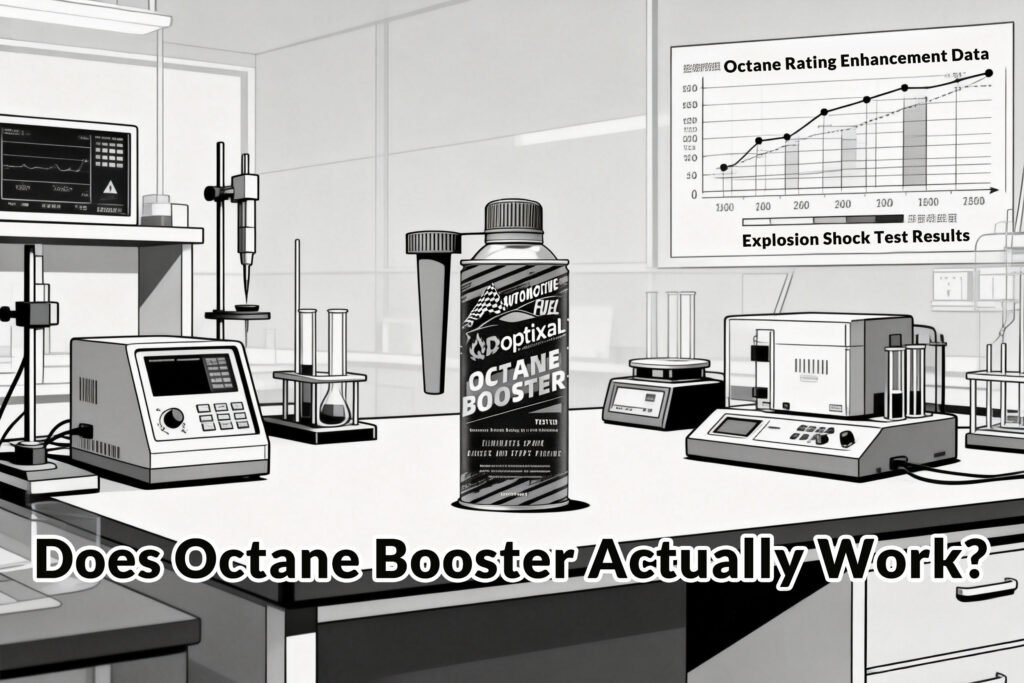
Yes, octane boosters can work, but their effectiveness is not universal and depends heavily on your specific engine, the product’s quality, and what you expect it to do. They are not a “magic horsepower potion” for every vehicle. A quality octane booster serves a specific function: it raises the fuel’s octane rating, which is a measure of its resistance to premature ignition, known as knocking or pinging. For engines that require high-octane fuel but are running on lower-grade gasoline, a booster can restore lost performance and protect against damaging detonation.
In the right scenario, the benefits are real. For a high-performance, turbocharged, or modified engine with a tune that requires premium fuel, a legitimate octane booster can enable more aggressive ignition timing and higher boost pressure safely. This can unlock measurable horsepower gains, as demonstrated in controlled dyno tests where specific products allowed for significant power increases without knock. Owners of classic cars designed for leaded fuel also use boosters as a necessary supplement for smooth operation with modern gasoline.
However, it’s crucial to temper expectations and understand the limitations. For a standard modern car designed to run perfectly on regular 87-octane fuel, adding an octane booster will provide no performance or efficiency benefits. The engine’s computer is not tuned to take advantage of the higher octane, and the fuel itself is not more energetic. Furthermore, many commercial products offer only minimal octane increases sometimes as little as a tenth of a point making their effect negligible for the cost.
A key point of confusion is mistaking octane for cleaning power. Higher octane does not clean your engine. Any cleaning effect comes from separate detergent additives that may be included in some booster formulas or are already present in top-tier gasoline, regardless of the octane rating. Therefore, using a booster as a cleaning agent is not its primary or most effective purpose.
Ultimately, an octane booster is best understood as a targeted solution for a specific deficiency, similar to taking a vitamin when you have a proven lack of it. It works when you need to correct low fuel octane for a demanding engine, when premium fuel is unavailable, or to protect a tuned engine at a track day. For everyday driving in a stock vehicle that runs fine on the manufacturer’s recommended fuel, it is typically an unnecessary expense with no real benefit
Octane Rating Explained: Why It Matters for Performance
The octane rating displayed on every gas pump is not a measure of a fuel’s power or energy content, but rather its stability under pressure. Specifically, it measures a gasoline’s resistance to a problematic condition called “knock” or “detonation.” This number, such as 87, 91, or 93, indicates how much the fuel can be compressed before it spontaneously ignites. A higher octane number signifies greater resistance to this unwanted self-ignition, which is the fundamental key to unlocking performance in certain engines.
Knock occurs when the air-fuel mixture in the cylinder ignites prematurely due to heat and pressure alone, before the spark plug fires. This creates multiple, chaotic flame fronts that collide violently, producing damaging shockwaves, a metallic pinging sound, and excessive heat. For any engine, knock is harmful—it reduces efficiency, robs power, and can cause severe mechanical damage over time, such as to pistons and cylinder heads. Therefore, preventing knock is essential for both engine health and performance.
This is where engine design dictates octane needs. High-performance engines achieve greater power through higher compression ratios or forced induction (turbocharging/supercharging). These methods squeeze the air-fuel mixture more intensely, creating more heat and pressure, which dramatically increases the risk of knock. To safely harness this potential, they require high-octane fuel. Using low-octane fuel in such an engine forces the computer to drastically retard ignition timing and reduce boost, protecting the engine but sacrificing the very power it was built to deliver.
For modern engines, the relationship is managed by sophisticated electronics. Your car’s Engine Control Unit (ECU) constantly monitors for knock via sensors. If it detects pinging while using the recommended fuel, it will adjust parameters to stop it. When you use a higher octane fuel than necessary in a standard engine, you typically gain nothing, as the ECU is already optimized for the lower rating. However, in a performance-tuned engine, high-octane fuel allows the ECU to advance timing and increase boost to their maximum, safe, performance-oriented settings, enabling the engine to produce its advertised power.
Consequently, the “right” octane is the one specified by your vehicle’s manufacturer. Using premium fuel in a car designed for regular is an unnecessary expense with no performance or efficiency benefit. Conversely, using regular fuel in a car that requires premium is a false economy, as it forces the engine into a protective, reduced-power mode and risks long-term damage. Ultimately, octane matters for performance because it is the enabler that allows advanced engine designs to operate safely at their most powerful and efficient levels.
Signs Your Car Could Benefit from an Octane Boost.
The most definitive and urgent sign is audible engine knock or ping, especially under load. This is a distinct metallic rattling or pinging sound that occurs when you accelerate hard, drive up a steep hill, or tow a heavy load. This sound is the direct result of fuel prematurely detonating in your cylinders, and it means your engine’s octane requirement is not being met by the current fuel. Ignoring this symptom can lead to costly damage over time, as the violent shockwaves from knock can harm pistons, rings, and cylinder heads. If you consistently hear this, your car is actively asking for higher-octane fuel.
You may experience a noticeable lack of power or sluggish acceleration, particularly in situations where the engine demands peak performance. If your car feels lethargic, hesitates, or stumbles during hard acceleration, it could be because the engine’s computer is detecting knock and responding by retarding the ignition timing. This protective maneuver sacrifices power to prevent damage. A higher octane fuel can eliminate the knock signal, allowing the computer to restore optimal timing and giving you back the responsive throttle and power you expect.
Owners of older classic cars or modified performance vehicles are prime candidates. Classic cars built before the mid-1970s were often designed for leaded gasoline with very high octane ratings (often 100+). Modern unleaded premium fuel may still be insufficient, leading to persistent knock and overheating. Similarly, any vehicle with performance modifications—such as a raised compression ratio, advanced timing, or a turbocharger/supercharger upgrade—inherently has a higher octane requirement. Using pump gas without an octane booster in these cases can severely limit the benefits of your modifications and risk engine damage.
Environmental and situational factors can also create a temporary need. Extremely hot weather increases under-hood temperatures, which can push a marginal fuel mixture over the edge into knock. Driving at high altitudes, where the air is thinner, can also affect combustion dynamics. If your car runs fine most of the year but develops a ping during a summer heatwave or a mountain road trip, using a higher octane fuel or a booster for that tank can solve the issue. It’s a sign that your engine is operating at the very limit of its fuel’s capability under those specific conditions.
Finally, the most straightforward sign is written in your owner’s manual. If your vehicle’s manufacturer explicitly “recommends” or “requires” premium fuel (typically 91 octane or higher), then your car is engineered to benefit from it. Using a lower grade means the engine will never perform as designed. You may not always hear audible knock in modern cars with sophisticated sensors, but the computer will constantly be adjusting parameters downward, resulting in reduced efficiency and power. Adhering to the manufacturer’s specification is the best way to ensure optimal performance, fuel economy, and engine longevity.
Conclusion
In summary, octane boosters are specialized chemical additives designed to solve a specific engineering problem: fuel knock caused by insufficient octane. They work by stabilizing the gasoline, allowing engines—particularly those with high compression, forced induction, or advanced tuning—to operate safely at their designed performance level. Understanding that octane rating is a measure of stability, not inherent power, is key to recognizing that these products are not generic power enhancers but rather targeted correctors for a fuel deficiency.
Therefore, the decision to use an octane booster should not be based on marketing myths but on clear, factual needs. For the average car running smoothly on the manufacturer’s recommended fuel grade, an octane booster is an unnecessary expense that will yield no tangible benefits. Its true value is unlocked in specific, real-world scenarios: when premium fuel is unavailable for a car that requires it, when towing or driving in extreme conditions induces temporary knock, or when protecting a modified or classic engine designed for higher octane than modern pump gas provides.
Ultimately, viewing an octane booster as a strategic tool rather than a routine supplement is the wisest approach. It serves as a reliable backup plan to protect your engine and preserve performance when the fuel at the pump falls short of your vehicle’s requirements. By aligning its use with genuine technical needs rather than exaggerated claims, you ensure that your investment contributes meaningfully to the health and performance of your engine, making it a smart addition to a knowledgeable driver’s maintenance kit for the right circumstances
Frequently Asked Questions (FAQ)
1. Q: Will an octane booster improve my car’s fuel economy?
A: Typically, no, if your car is designed for regular octane fuel. Using a higher octane than required does not make the fuel more “energetic” or efficient. However, if your high-performance or turbocharged car that requires premium fuel has been running on regular fuel and experiencing knock, correcting the knock with an octane booster can allow the engine to return to its optimal efficiency map, potentially restoring lost fuel economy. For most standard vehicles, you will not see an MPG increase.
2. Q: Is an octane booster a substitute for premium gasoline?
A: In a temporary, emergency situation, yes—it can be a functional substitute. If your vehicle requires premium (91+ octane) and you can only find regular (87 octane), adding a quality octane booster to the tank can raise the octane level to prevent damaging knock. However, it is not a perfect or cost-effective long-term replacement. Consistently using premium fuel at the pump is simpler and often cheaper per tank than repeatedly buying booster bottles.
3. Q: Can using an octane booster harm my engine or emissions system?
A: Using a reputable, mainstream octane booster at the recommended dosage is generally safe for modern engines and catalytic converters. The primary risk comes from using low-quality products with unreliable ingredients or from extreme overuse.