When your engine knocks or you’re preparing for a high-performance drive, reaching for an octane booster can seem like a quick and powerful solution. Promises of increased horsepower and smoother operation are compelling, but many car owners are left wondering: at what cost? The potential octane booster side effects are a critical consideration that often lurks behind the flashy marketing, turning a well-intentioned remedy into a source of new and expensive problems for your vehicle.
These aftermarket fuel additives are designed to elevate the octane rating of your gasoline, theoretically preventing premature detonation in high-compression engines. However, modern engines are complex ecosystems of precise sensors, delicate fuel system components, and carefully calibrated computers. Introducing a concentrated chemical cocktail into this balanced environment can have unintended consequences that range from minor irritations to severe mechanical damage.
Understanding these risks is not about dismissing octane boosters entirely—they have their legitimate uses. Instead, it’s about becoming an informed car owner who can weigh the temporary benefits against the long-term health of your engine. This guide will delve into the specific side effects you should be aware of, separating fact from fiction and empowering you to make the safest choice for your car.
Common Misconceptions About Octane Booster Safety
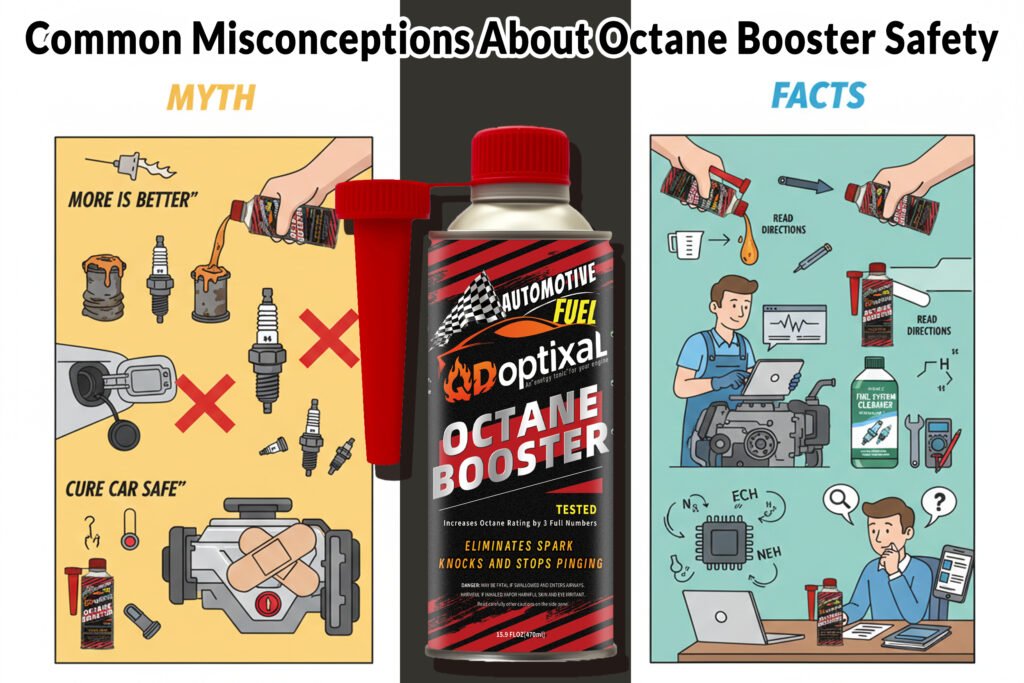
One of the most pervasive and dangerous myths is the belief that “if a little is good, more must be better.” This logic can lead to catastrophic engine damage. Octane boosters are highly concentrated chemicals. Doubling or tripling the dose doesn’t linearly increase octane; instead, it drastically increases the concentration of solvents, carriers, and metallic compounds (like MMT) in your fuel. This can overwhelm the fuel system, leading to clogged filters, fouled spark plugs with orange residue, and deposits on oxygen sensors and catalytic converters, effectively choking your engine’s emissions system and triggering costly check engine lights.
Another common misconception is that all octane boosters also serve as comprehensive fuel system cleaners. While some premium formulations may contain detergents, their primary and overwhelming function is to alter fuel combustion characteristics. Relying on an octane booster to clean injectors or intake valves is ineffective and neglectful. For cleaning, you need a product specifically designed with strong, focused detergents. Using an octane booster as a cleaner ignores real maintenance needs and may leave harmful deposits from its own chemical makeup, ironically making the problem it was supposed to solve even worse.
Many drivers believe an octane booster is a universal “cure-all” for any engine performance issue, from rough idling to loss of power. This is a hazardous oversimplification. Problems like misfires, poor acceleration, or knocking can stem from dozens of sources: faulty spark plugs, a failing oxygen sensor, clogged air filters, or low fuel pressure. Dumping an octane booster into the tank without proper diagnosis is like taking a strong painkiller for a broken arm without setting the bone—it might mask the symptom (knocking) temporarily, but the underlying mechanical failure persists and worsens, leading to more severe damage and expensive repairs down the line.
A particularly modern misconception is that octane boosters are perfectly safe for all new, computer-controlled vehicles. While modern Engine Control Units (ECUs) can adjust timing based on knock sensor feedback, they are calibrated for pump gasoline with specific additive packages. Introducing a foreign, potent chemical can confuse these adaptive systems. The ECU may advance timing aggressively based on the higher octane, but if the booster’s effects are inconsistent or lead to new deposits, the adjustment can become detrimental. Furthermore, many new car warranties explicitly warn against aftermarket additives, and using one could be grounds for voiding coverage on related fuel system or engine repairs.
Finally, there’s a false sense of security that because a product is sold over-the-counter, it must be completely safe and without risk when used “as directed.” This ignores the vast variation in vehicle age, condition, and engineering. A booster formulated for occasional use in a high-performance classic car may be disastrous in a modern direct-injection turbocharged engine with tight tolerances. “Safety” is relative to your specific vehicle. The directions on the bottle provide a general guideline but cannot account for your engine’s unique wear, existing deposits, or sensitivity to certain chemicals, making personal research and caution paramount.
Potential Side Effects: Spark Plug Fouling and O2 Sensors
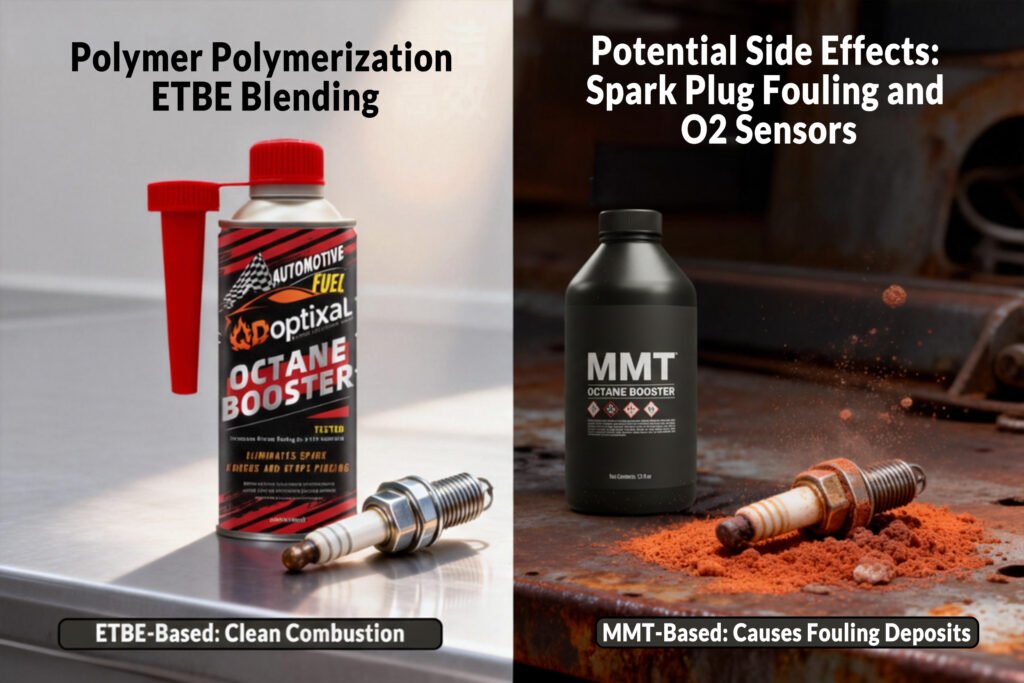
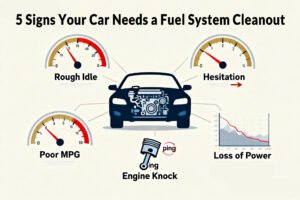
Among the most frequent and mechanically damaging side effects of octane boosters, particularly those containing the metallic compound MMT (methylcyclopentadienyl manganese tricarbonyl), is the fouling of spark plugs. Spark plugs require a clean, exposed electrode to generate a strong, consistent spark that ignites the air-fuel mixture. When metallic additives like MMT are combusted, they leave behind a conductive, rust-coloured, or orange ceramic-like deposit on the plug’s tip. This deposit can create an unintended path for the spark’s electrical current, causing it to “short” across the insulator instead of jumping the electrode gap. The result is a weak spark or a complete misfire, leading to immediate symptoms like rough idling, loss of power, poor fuel economy, and a flashing check engine light.
The damage extends beyond just the spark plugs to a far more sensitive and expensive component: the oxygen (O2) sensors. Your car’s upstream and downstream O2 sensors are the engine management system’s “eyes” into the combustion process, constantly measuring oxygen levels in the exhaust to help the computer adjust the air-fuel ratio for optimal performance and emissions. These sensors have a delicate zirconia or titania element that must be exposed to exhaust gases. The same metallic deposits that coat spark plugs will also coat the sensor’s element, creating an insulating barrier. This “poisons” the sensor by slowing its response time and providing inaccurate voltage readings to the Engine Control Unit (ECU).
The consequences of contaminated O2 sensors are systemic and degrade overall engine operation. With faulty data from a sluggish or poisoned sensor, the ECU can no longer accurately trim the fuel mixture. It may incorrectly inject too much fuel (running rich) or too little fuel (running lean), based on the bad intelligence. A rich condition wastes fuel, increases hydrocarbon emissions, and can overheat and plug the catalytic converter. A lean condition can cause dangerous engine-damaging detonation (pre-ignition) and higher nitrogen oxide emissions. Essentially, a compromised O2 sensor throws the entire engine’s feedback loop into disarray, all because of the residual ash from an octane booster.
Addressing these issues is neither simple nor cheap. While spark plugs can be replaced relatively easily, the cost multiplies in modern engines with multiple cylinders and hard-to-reach plug locations. However, simply replacing fouled plugs is a temporary fix if the root cause—the continued use of a metallic octane booster is not addressed. The new plugs will foul again rapidly. The replacement of O2 sensors is significantly more costly, as the parts themselves are expensive, and labor can be intensive depending on their placement in the exhaust system. Furthermore, a single compromised upstream sensor can necessitate the replacement of the downstream sensor and even the catalytic converter if it has been damaged by prolonged incorrect fuel mixtures.
Therefore, understanding this cause-and-effect chain is crucial for preventative maintenance. Using non-metallic, cleaner-burning octane boosters (if necessary) can mitigate these specific risks, as they rely on different chemistry to raise octane levels. The safest approach is to recognise that these symptoms, persistent misfires after using a booster, an illuminated check engine light with codes for sensor performance or fuel trim, are not mere coincidences. They are direct indicators of chemical interference with two of the most vital components for engine efficiency and longevity, turning a sought-after performance boost into a costly cycle of repairs.
How to Use Octane Booster Safely to Avoid Engine Damage.
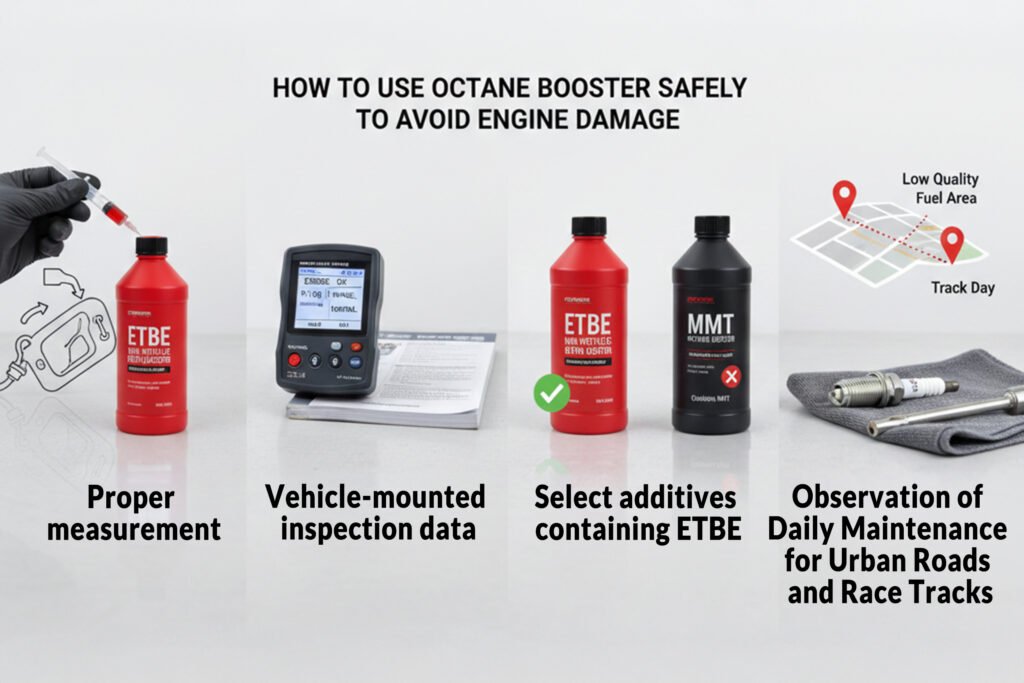
The cardinal rule for safe octane booster use is to strictly follow the manufacturer’s dosage instructions without deviation. More is unequivocally not better. These formulas are highly concentrated, and exceeding the prescribed amount per volume of fuel dramatically increases the risk of forming the damaging deposits discussed earlier. Always add the booster to a full or nearly full gas tank. This ensures proper, rapid dilution and mixing within the fuel, preventing a localised high concentration of chemicals from passing through the fuel system, which could harm seals, lines, and injectors.
Before you ever pour in a booster, conduct a thorough diagnosis to confirm you actually need one. Persistent engine knock (pinging) in a modern car under normal acceleration is not typical and can be a symptom of other problems like carbon deposits, a faulty knock sensor, or incorrect spark plugs. Using a booster as a diagnostic tool masks the real issue. Consult your owner’s manual for the manufacturer’s recommended fuel octane. Only consider a booster if you are running a high-performance or classic engine that requires higher octane than available at local pumps, or if you are experiencing verified knock while using the correct fuel.
Product selection is your most powerful tool for preventing damage. Actively avoid octane boosters that contain metallic additives like MMT (Methylcyclopentadienyl Manganese Tricicarbonyl), which are primary culprits in spark plug and O2 sensor fouling. Instead, seek out modern, “clean” formulas that are non-metallic and deposit-free. These typically use aromatic hydrocarbons or other organic compounds to increase octane. Look for explicit claims like “safe for O2 sensors and catalytic converters” or “non-metallic” on the label. Investing in a higher-quality product from a reputable brand is cheaper than replacing fouled sensors.
For optimal safety, treat octane booster as a strategic reserve for specific situations, not a routine additive. Its legitimate uses are finite: temporarily alleviating knock when traveling in areas where only lower-octane fuel is available, providing a necessary octane bump for a tuned or high-compression engine at a track day, or stabilizing fuel in a classic car before winter storage. It is not a substitute for high-quality Top Tier detergent gasoline, which should form the basis of your engine’s diet. Using a booster with every tank needlessly and repeatedly exposes your engine to chemical solvents and increases the cumulative risk of side effects.
Finally, integrate booster use with heightened maintenance awareness. If you must use an octane booster, be prepared to inspect your spark plugs more frequently for early signs of unusual deposits, especially after sustained use. Pay close attention to your vehicle’s behavior and any check engine lights. Using a booster also makes it more critical to follow a robust fuel system maintenance schedule, including using a dedicated, reputable fuel injector cleaner separately to counteract any potential deposit formation and keep the entire system functioning cleanly. This proactive approach allows you to harness the temporary benefit while actively managing and mitigating the inherent risks.
Conclusion
Octane boosters exist in a gray area of automotive care; they are not inherently “good” or “bad,” but they are powerful chemical tools that demand respect and understanding. The potential side effects, from spark plug fouling to catalytic converter damage, are very real risks that stem from misuse, overuse, or the use of inferior products. Ignoring these risks in pursuit of a minor performance gain or as a substitute for proper maintenance is a gamble with your engine’s health and your wallet.
However, an informed car owner can navigate this space safely. The key is to shift your mindset: an octane booster should be a targeted solution for a verified problem, not a routine additive. By choosing non-metallic, deposit-free formulas, adhering strictly to dosage, and prioritising high-quality fuel, you can mitigate the most common dangers. The safest path forward almost always starts with your vehicle’s owner’s manual and a trusted mechanic, not a bottle on a shelf.
Ultimately, the most reliable “octane booster” for your engine is consistent, proper maintenance and using the fuel grade recommended by its engineers. Protect your investment by making decisions grounded in knowledge, not marketing promises. Your car’s longevity and performance will thank you for it.