In the vast world of automotive care, one of the most common and confusing aisles is the one filled with fuel additives and treatments. Bottles make sweeping promises to clean, protect, boost, and restore, leading many vehicle owners to believe that any treatment will work for any car or truck. This misconception can not only be a waste of money but also potentially counterproductive. The critical truth is that modern and vintage vehicles have vastly different engineering needs, which is precisely why they require specialised fuel treatments. Understanding this specialisation is key to effective maintenance and preserving the health of your engine.
Imagine using the same specific medicine for every human ailment; it simply wouldn’t work, and could cause harm. The same logic applies under the hood. The fuel system of a heavy-duty diesel truck battling soot is fundamentally different from that of a high-revving sports car prone to carbon knock, or a classic car with a carburettor vulnerable to stale fuel gum. Pouring a one-size-fits-all solution into your fuel tank ignores these profound mechanical and chemical differences. The wrong treatment might leave the real problems unaddressed while introducing unnecessary chemicals, failing to deliver the performance and protection you paid for.
This blog post will serve as your essential guide to cutting through the marketing clutter. We will delve into the distinct requirements of major vehicle categories from modern direct-injection petrol engines and robust diesels to cherished classics and efficient hybrids. By exploring the science behind deposit formation, lubrication needs, and combustion dynamics in each engine type, we will clarify which treatment features are crucial for your vehicle. Our goal is to empower you with the knowledge to make an informed choice, ensuring the additive you select actively targets the specific vulnerabilities of your engine for optimal performance and longevity.
Why Different Vehicles Require Specialised Fuel Treatments.
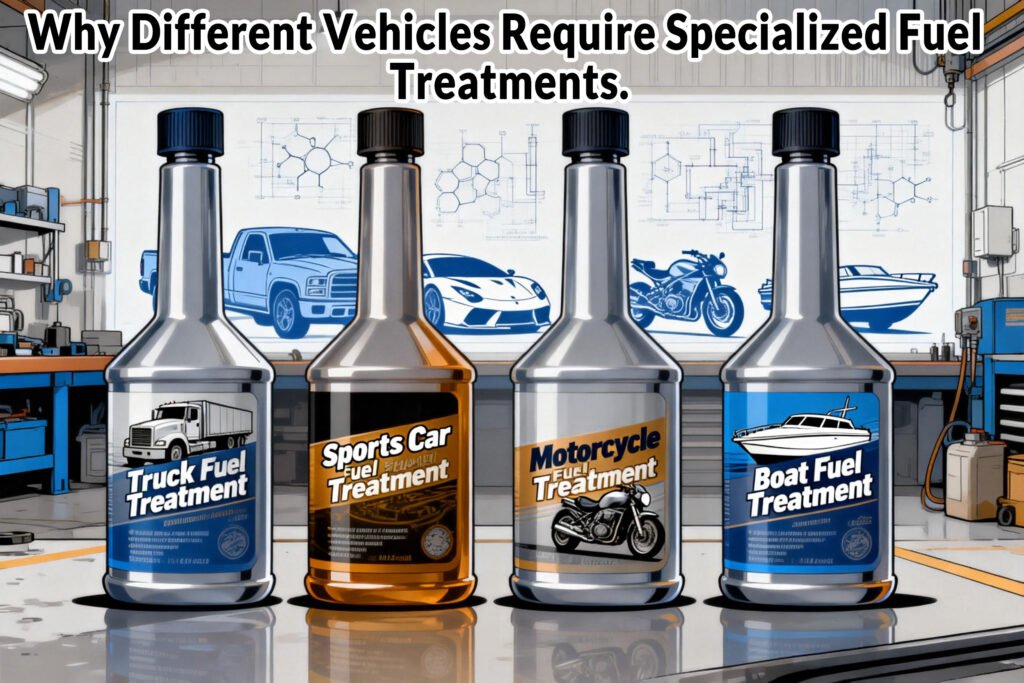
The idea that a single fuel additive can serve all vehicles is a misconception. Modern engines are highly engineered systems with vastly different designs, operating conditions, and vulnerabilities. Consequently, a treatment that benefits one engine type might be ineffective or even harmful to another. Specialised fuel treatments are essential because they are formulated to address the specific chemical, mechanical, and operational challenges unique to different vehicle categories.
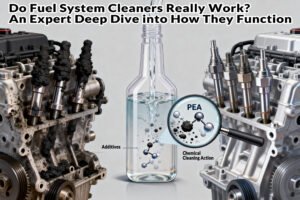
Firstly, high-performance gasoline engines, such as those in sports cars and turbocharged vehicles, operate under extreme pressures and temperatures. These conditions make them particularly susceptible to pre-ignition (knock) and carbon deposit formation on intake valves and combustion chambers. A specialised treatment for these engines will contain high concentrations of advanced detergent and dispersant chemicals designed to clean and keep clean critical components, as well as octane boosters or combustion catalysts to ensure smooth, controlled burning under stress. Using a generic cleaner may not provide the aggressive cleaning or anti-knock protection required, leaving the engine vulnerable to power loss and potential damage.
Conversely, diesel engines have a completely different set of requirements. They rely on compression ignition, feature intricate high-pressure fuel injection systems (like common rail or pump injectors), and produce significant soot. A specialised diesel treatment focuses on enhancing cetane (the diesel equivalent of octane) for smoother cold starts and cleaner combustion, containing powerful dispersants to prevent soot particles from clumping and clogging the fuel system, and incorporating lubricity agents to protect the ultra-precise injection pumps and injectors from wear, which low-sulfur diesel fuels lack. A gasoline-oriented additive would be utterly ineffective in addressing these diesel-specific issues.
The needs of older classic cars with carburetted engines stand in stark contrast to modern fuel-injected vehicles. Their fuels can evaporate over time, leaving behind sticky varnish and gum that clog tiny jets and passages in the carburettor and fuel lines. Treatments for these classics are rich in solvents and stabilisers designed to dissolve these older deposits and prevent fuel degradation during storage. They may also contain lead substitutes to protect valve seats in engines not designed for unleaded fuel. Modern detergent additives, engineered for fuel injectors, are often too mild to tackle decades-old varnish and do nothing to address valve seat protection.
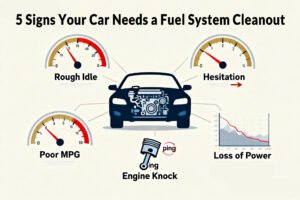
Finally, the rise of hybrid and direct-injection (GDI) engines introduces new challenges. Hybrids, with their frequent engine shutdowns, experience fuel dilution from oil and condensed moisture in the crankcase and fuel system, necessitating treatments with moisture dispersants and stabilisers. GDI engines, where fuel is sprayed directly into the cylinder, bypass the intake valves, allowing carbon to build up on them from crankcase vapours. Specialised GDI treatments often include strong detergents and can be designed to work via the fuel or intake system to clean these backdoor deposits that standard fuel additives cannot reach. Using an inappropriate treatment fails to solve these modern deposit issues, leading to lost efficiency and rough idle.
In summary, the specialization of fuel treatments is a direct response to the engineering diversity of vehicles. From combating soot in diesels and knock in turbocharged engines to dissolving gum in classics and addressing the unique deposit patterns in GDI and hybrid systems, each formula is a targeted solution. Using the correct treatment is a matter of preventative maintenance that protects the specific weaknesses of an engine, ensuring optimal performance, efficiency, and longevity.
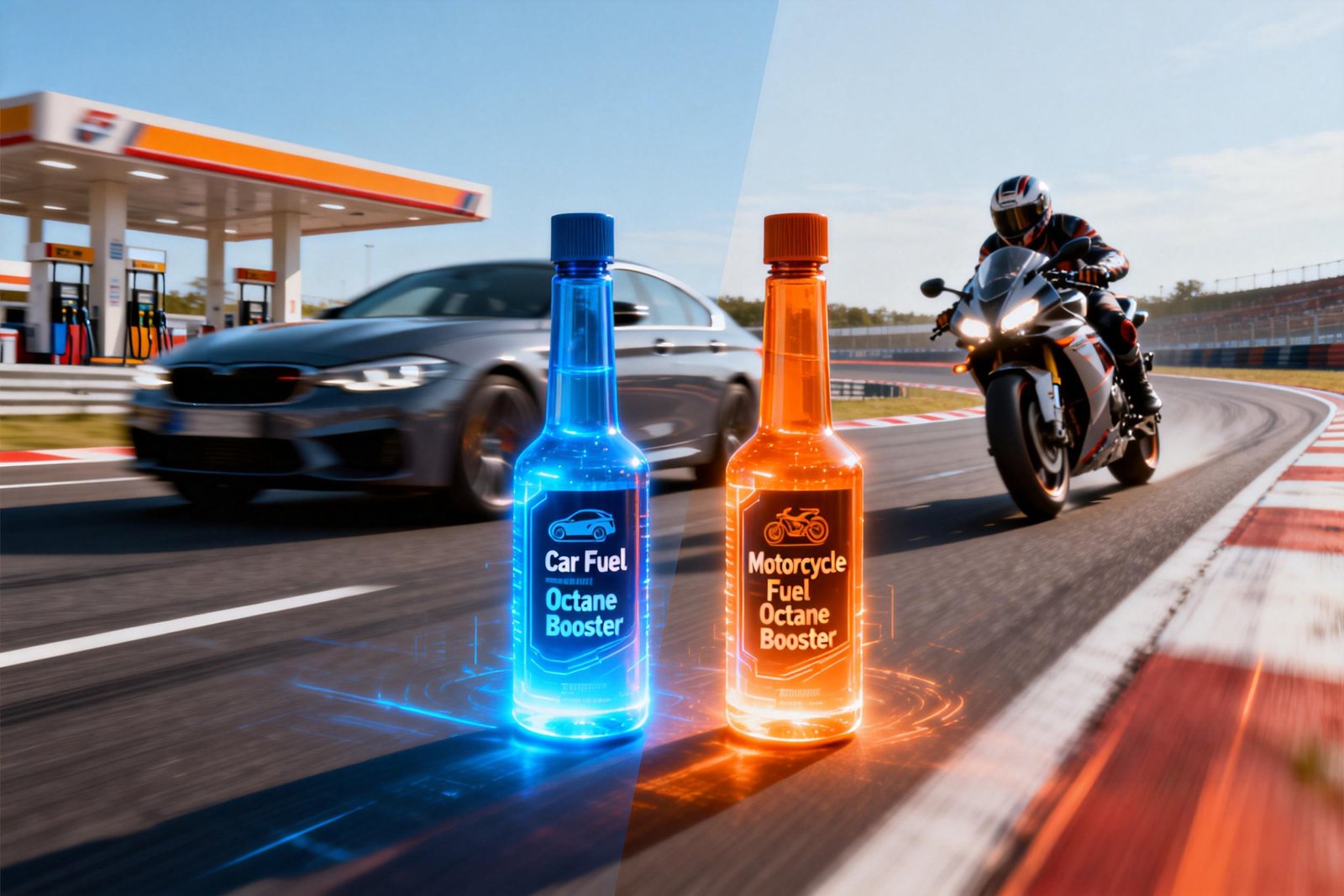
Octane Booster for Motorcycles: Protecting Small, High-RPM Engines.
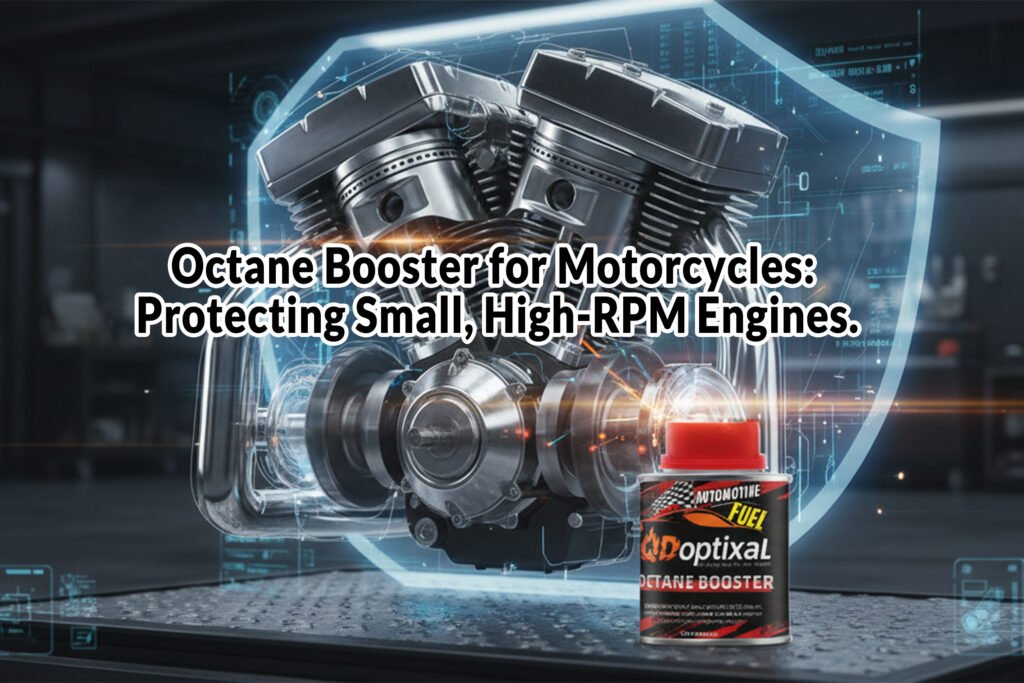
The need for an octane booster in a motorcycle stems from the distinct and demanding architecture of its powerplant. Unlike many car engines, motorcycle engines, particularly those in sport and performance models, are characterised by their exceptionally high specific output, achieving remarkable power from a relatively small displacement. This is accomplished through aggressive engineering: high compression ratios, tightly packed combustion chambers, and the ability to sustain very high rotational speeds. These factors create an intense thermal and pressure environment within the cylinder. Using a fuel with an insufficient octane rating in such an engine can lead to premature and uncontrolled combustion, known as detonation or “knock,” which is a primary threat to engine integrity.
Detonation in a high-strung motorcycle engine is far more than just an audible “pinging” noise; it is a destructive force. When the air-fuel mixture ignites spontaneously from excessive heat and pressure before the spark plug’s timed ignition, it creates a shockwave that violently collides with the flame front from the proper spark. This results in massive, instantaneous spikes in cylinder pressure and temperature. For a small-displacement engine with smaller, lighter components like pistons and connecting rods, the physical trauma is severe. This can lead to eroded piston crowns, scored cylinder walls, and failed piston rings. In extreme cases, detonation can melt a hole directly through the aluminium piston, resulting in catastrophic engine failure. The protective role of an octane booster is to raise the fuel’s resistance to auto-ignition, ensuring the mixture burns smoothly and predictably under this extreme duress.
Choosing the correct octane booster is critical, as not all are created equal, and some can even harm a motorcycle’s finer systems. High-quality boosters use advanced compounds like MMT (Methylcyclopentadienyl Manganese Tricarbonyl) or proprietary aromatic blends to effectively increase the Research Octane Number (RON). Crucially, a good motorcycle-specific formula will be mindful of the vehicle’s complete fuel system. Many modern motorcycles use precise fuel injectors and may have oxygen sensors and catalytic converters. Inferior boosters that rely on large quantities of harsh solvents or heavy metals like ferrocene can leave damaging deposits on spark plugs and oxygen sensors, clog injectors, and coat or poison catalytic converters, leading to thousands in repairs. The ideal product provides a significant octane increase with clean-burning chemistry.
The application of an octane booster is particularly relevant for riders who modify their machines or push them hard on track days. Any performance modification, such as increasing compression via a different piston, advancing ignition timing, or installing a forced induction system (turbo or supercharger), directly elevates the engine’s octane requirement. Furthermore, even on a stock high-performance bike, sustained high-load, high-RPM use on a racetrack generates far more cylinder heat than street riding. In these scenarios, the factory-recommended premium pump fuel (often 91 or 93 AKI) may no longer be sufficient to prevent knock. An octane booster acts as an essential insurance policy, providing the necessary fuel stability to safely realise the full potential of the engine’s performance and protect the significant investment in both the motorcycle and its upgrades.
Ultimately, for the discerning motorcyclist, an octane booster is a targeted tool for engine preservation, not merely a generic power additive. It directly addresses the unique vulnerability of small, high-revving, high-compression engines to destructive detonation. By carefully selecting a high-quality, motorcycle-compatible product, riders can ensure their engine operates within its intended thermal and combustion parameters, especially under strenuous conditions or with performance modifications. This proactive measure safeguards against costly mechanical damage, ensures consistent, smooth power delivery, and is a fundamental aspect of advanced motorcycle maintenance for anyone seeking to protect and maximise the lifespan of their high-performance engine.
Automotive Fuel Boosters: Maximising MPG and Horsepower.
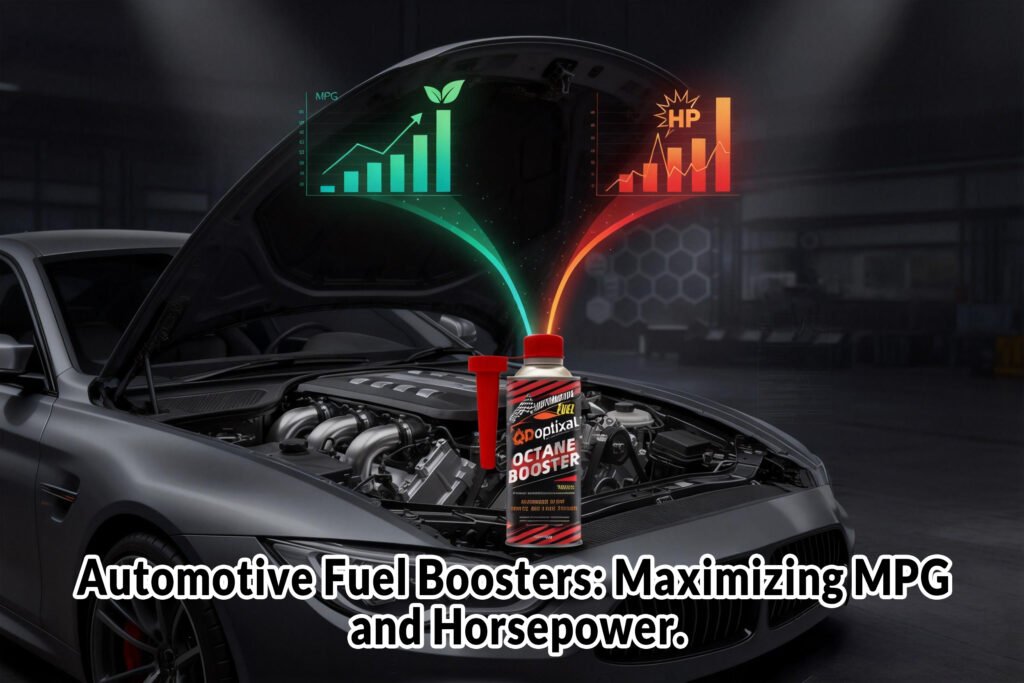
The allure of automotive fuel boosters is rooted in the universal desire to improve a vehicle’s efficiency and performance, promising more miles per gallon and increased power from the same engine. Fundamentally, these additives are chemical formulations designed to be mixed with gasoline or diesel to modify the fuel’s properties and interact with the engine’s internal components. They aim to bridge the gap between the limitations of standard pump fuel and the ideal conditions for perfect combustion. However, their effectiveness is not uniform and hinges on the specific problems they address, the engine’s design and condition, and the scientific validity of the booster’s own formula. Understanding their mechanisms is key to discerning realistic benefits from marketing hyperbole.
A primary and well-proven avenue for maximising MPG is through the cleaning action of high-quality detergent additives. Over time, fuel injectors can become clogged with carbon and varnish deposits, disrupting the fine fuel spray pattern into the combustion chamber. This leads to poor fuel atomization, inefficient burning, and wasted gasoline. A potent fuel system cleaner, or “booster” focused on detergency, can dissolve these deposits, restoring the injector’s spray pattern. This allows for more complete and controlled combustion, enabling the engine management system to operate at its most efficient parameters, thereby improving fuel economy. This benefit is most pronounced in engines with accumulated deposits, offering a restoration of lost MPG rather than a magical increase beyond the engine’s original design.
For horsepower gains, the most direct mechanism is through the use of octane boosters or cetane improvers (for diesel). Horsepower is a function of efficient, controlled, and timely combustion. In gasoline engines, using a fuel with a higher octane rating than the engine requires allows the Engine Control Unit (ECU) to advance ignition timing more aggressively without triggering destructive knock (pre-ignition). More advanced timing means the expanding gases push the piston down more effectively throughout the power stroke, translating to increased torque and horsepower. A legitimate octane booster can provide this higher threshold, particularly in high-performance, turbocharged, or high-compression engines that are already operating near the knock limit on pump fuel. The gain is not from the chemical itself creating energy, but from unlocking the engine’s ability to run a more optimal ignition map.
It is crucial to differentiate between the types of boosters and their targeted outcomes. Broadly, they fall into two categories: cleaners and performance enhancers. Multi-functional formulas attempt to do both. Cleaning boosters, as mentioned, focus on detergents and deposit removal. Performance-enhancing boosters concentrate on raising octane/cetane, and may also include combustion catalysts or oxygenates intended to promote a more complete and rapid burn of the fuel-air mixture. The latter can sometimes yield marginal MPG improvements alongside power gains by extracting more chemical energy from the same volume of fuel. However, the most significant and measurable results are often seen when a booster corrects a specific deficiency, such as cleaning dirty injectors in an older vehicle or providing the necessary octane for a tuned engine on a hot day.
Ultimately, the responsible and effective use of automotive fuel boosters requires tempered expectations and selectivity. They are not magic potions that can circumvent the laws of thermodynamics or an engine’s fundamental design limits. For a well-maintained modern engine running on its recommended fuel, the gains from a booster may be negligible. However, for vehicles suffering from deposit-related inefficiencies, for engines operating in extreme conditions, or for enthusiasts seeking to exploit every ounce of performance from a modified engine, a specialised fuel booster can be a valuable tool. The key is to match the product’s stated mechanism to a genuine need of the vehicle, ensuring that the goal of maximising MPG or horsepower is pursued through a credible, chemistry-based solution rather than wishful thinking.
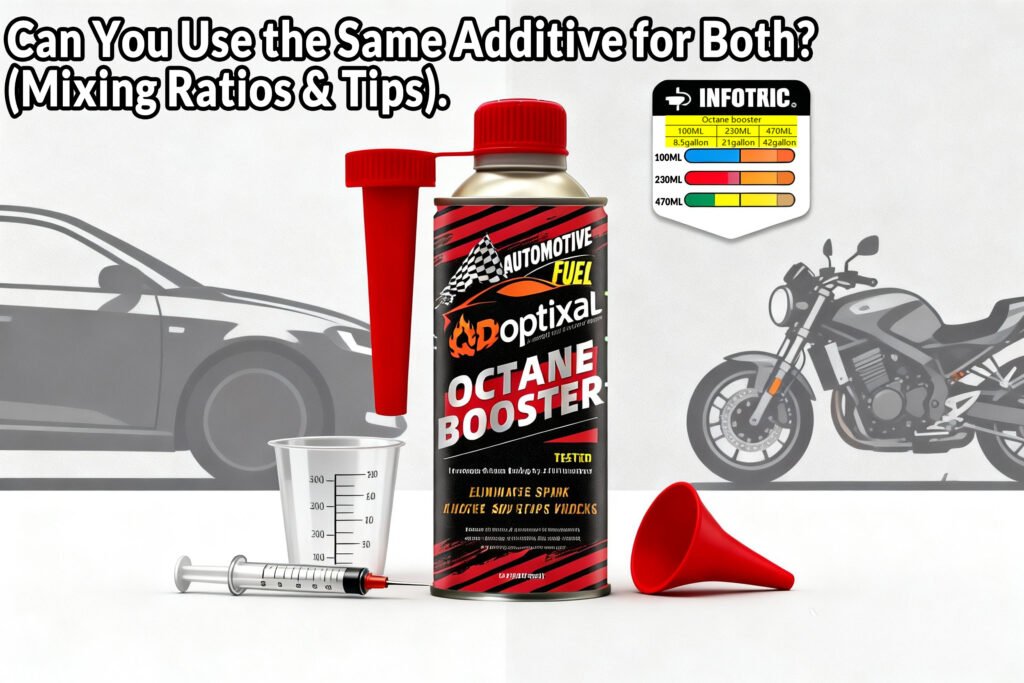
Can You Use the Same Additive for Both? (Mixing Ratios & Tips)
The fundamental answer is a resounding no; using the same additive interchangeably between different fuel types or engine families is strongly discouraged and can lead to inefficiency, engine damage, or component failure. Gasoline and diesel fuels, along with the engines they power, have fundamentally different chemistries and operational requirements. An additive formulated for one is chemically engineered to address specific challenges and is often chemically incompatible with the other. Pouring a diesel-specific additive into a gasoline tank, or vice-versa, is not a simple matter of reduced benefit it risks introducing compounds that can disrupt combustion, harm sensors, or damage fuel system components.
The core distinction lies in the base fuel and its combustion process. Diesel fuel is oil-based, requires a cetane rating for proper ignition, and produces soot as a primary byproduct. Diesel additives, therefore, focus on enhancing cetane, dispersing soot, and providing lubricity to protect high-pressure injection pumps. Gasoline is a solvent, has an octane rating to resist premature ignition, and forms different types of carbon deposits. Gasoline additives contain detergents for intake valve and injector cleaning, and octane boosters. Introducing a diesel lubricity agent into a gasoline system can lead to incomplete combustion and fouled spark plugs, while putting a gasoline octane booster into diesel fuel does nothing for its ignition quality and may harm sensitive injectors.
Beyond the gasoline/diesel divide, critical differences exist even within additive subtypes. For instance, a standard gasoline injector cleaner for a port fuel-injected engine may be inadequate for a modern Gasoline Direct Injection (GDI) engine, which suffers from intake valve deposits that fuel cannot reach. Using the wrong type means the problem area goes untreated. Furthermore, many diesel additives contain metals or other catalysts that are safe for diesel exhaust fluid (DEF) systems and diesel particulate filters (DPF) but would be catastrophic for a gasoline engine’s catalytic converter, potentially poisoning it and causing a costly failure. Always verify that an additive is explicitly labeled as safe for your vehicle’s entire emission control system.
If you are ever in a situation where you must use an additive in a different fuel type due to an emergency an unlikely scenario the concept of mixing ratios becomes critically important. You should never use the full bottle dose intended for one fuel type in the other. If necessary, and only if the product’s label does not explicitly forbid it, you might use a severely reduced ratio (e.g., 10-25% of the normal dose) as a stop-gap measure. For example, a diesel antigel in a gasoline car in extreme cold, at a tiny fraction of the dose, might prevent fuel line freeze, but the risks of combustion issues remain. The primary tip is to avoid this entirely; the secondary tip is that less is marginally safer than more, but it is never recommended.
The most important tip of all is to always consult your vehicle’s owner’s manual and read the additive product label meticulously. The manual may have specific warnings or recommendations. The product label will state its intended application. Do not make assumptions. Using the correct, specialised additive in the manufacturer-recommended dosage is the only way to ensure you are providing a benefit without incurring unintended consequences. When in doubt, choosing an additive that is certified by relevant automotive standards organisations (like Top Tier for gasoline detergents) for your specific engine type is the safest and most effective course of action.
Conclusion
In navigating the complex world of fuel additives, the overarching lesson is clear: specificity is paramount. From the high-compression, high-RPM demands of a motorcycle engine to the soot-laden environment of a diesel, and from the precision of modern GDI systems to the simple needs of a classic carburettor, each vehicle presents a unique set of chemical and mechanical challenges. The detailed exploration of specialised fuel treatments underscores that these products are engineered as targeted solutions, not universal cure-alls. An octane booster protects a sportbike from detonation by raising fuel stability, while a diesel treatment focuses on lubricity and soot dispersion objectives that are different yet often mutually exclusive. Recognising this fundamental engineering reality is the first step toward effective vehicle maintenance and performance optimisation.
Therefore, the informed vehicle owner must approach additives as precision tools rather than mere tonics. Success lies in diligent selection, matching the product’s proven chemical function to your engine’s verified need and meticulous adherence to usage guidelines. This means consulting your owner’s manual, reading product labels thoroughly, respecting the critical divide between gasoline and diesel chemistries, and applying the correct dosage. When chosen and used correctly, a specialised fuel treatment is a powerful ally that can clean vital components, restore lost efficiency, protect against specific wear, and safeguard your investment. Ultimately, discarding the myth of a universal additive empowers you to make choices that genuinely enhance your vehicle’s performance, economy, and longevity.
FREQUENTLY ASKED QUESTION
1. Can I use a diesel fuel additive in my gasoline car (or vice versa) in a pinch?
No, this is strongly discouraged and can be harmful. Diesel and gasoline fuels, along with their engine designs, have fundamentally different chemistries and requirements. A diesel additive is formulated to combat soot, improve lubricity for high-pressure pumps, and enhance cetane for compression ignition. Introducing these compounds into a gasoline engine can foul spark plugs, damage the catalytic converter, and lead to incomplete combustion. Conversely, a gasoline additive’s detergents and octane boosters are ineffective in diesel and may lack the necessary lubricity, potentially harming the injection system.
2. If I already use “Top Tier” detergent gasoline, do I need additional fuel treatments?
“Top Tier” gasoline contains a higher concentration of effective detergents that help keep fuel injectors and intake valves clean during normal operation. For many vehicles, this is sufficient. However, specialised treatments may still be beneficial for specific situations. These include restoring an engine with existing heavy deposits, providing extra protection for high-performance or turbocharged engines under extreme stress, or addressing issues beyond detergency, such as boosting octane for a tuned engine, adding lubricity for older diesel systems, or stabilizing fuel for seasonal storage.
3. Are fuel additives just a “band-aid” solution for poorly maintained vehicles?
Not exclusively. While a quality fuel system cleaner can be an excellent restorative measure for an engine with neglected deposits, additives also serve as important preventative and performance-enhancing tools. Even well-maintained vehicles can benefit from targeted treatments. Examples include using a diesel cetane improver for smoother cold-weather starts, a gasoline octane booster for consistent performance on track days, or a fuel stabilizer for any engine that will be idle for months. The key is selecting the right product for a specific, intended purpose.