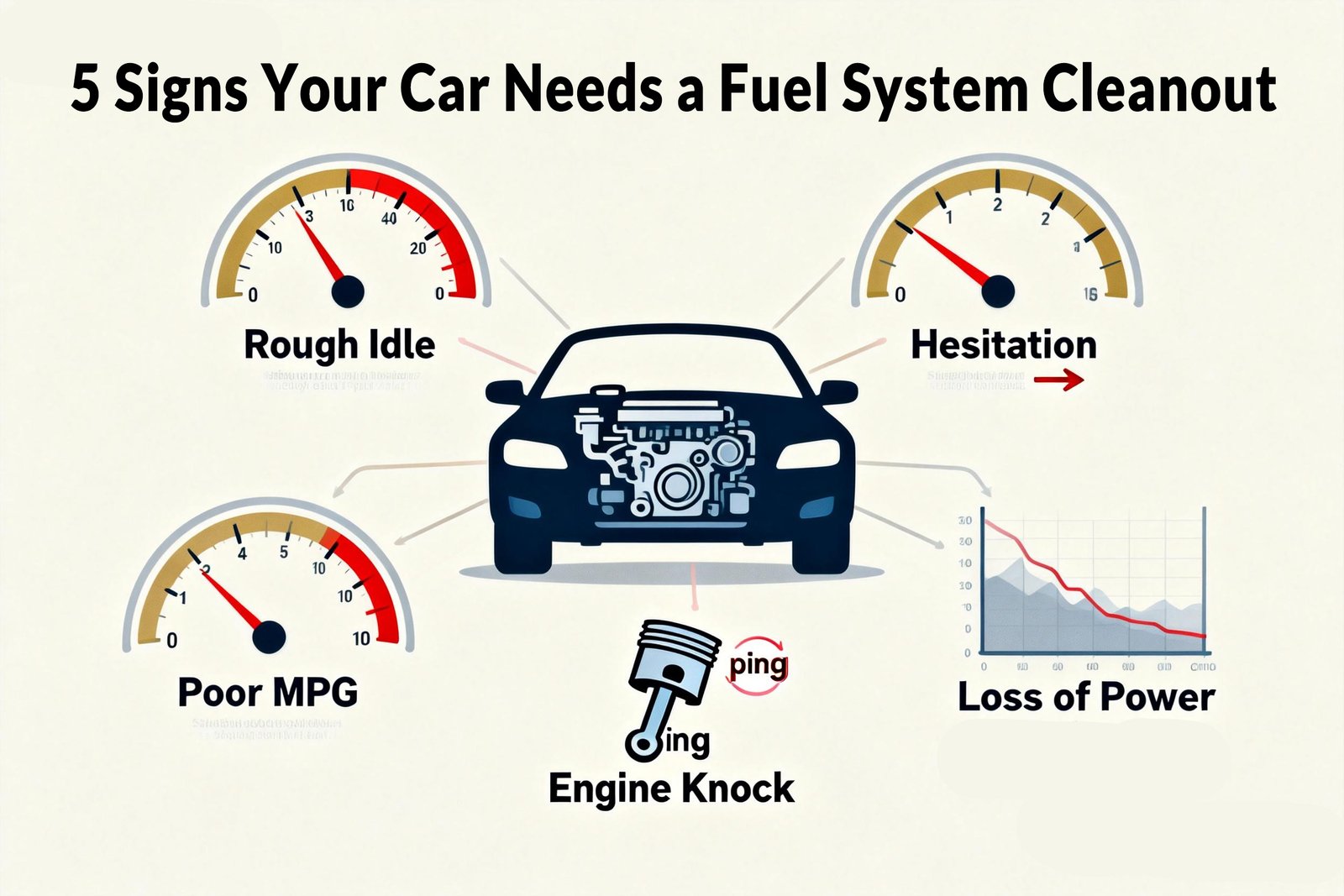
Your car’s fuel system is its circulatory system, delivering the precise mix of air and fuel needed for every ignition. Over time, this system can become clogged with carbon deposits, varnish, and grime from fuel, leading to a cascade of performance issues. Recognising the early warning signs is the key to preventing more costly repairs down the line and keeping your engine running smoothly.
Many drivers dismiss symptoms like a slight hesitation during acceleration or a minor dip in gas mileage as simple signs of an aging vehicle. However, these are often direct cries for help from your fuel injectors, intake valves, and combustion chambers. Ignoring them doesn’t just hurt your wallet at the pump; it can lead to severe engine problems.
This blog will guide you through the five most common symptoms that indicate your car is desperate for a fuel system cleanout. By understanding these signs, you can make an informed decision about using a quality fuel injection system cleaner or seeking a professional fuel system cleaning service to restore lost power, improve fuel economy, and ensure your engine’s longevity.
The Engine Idles Roughly or Stalls
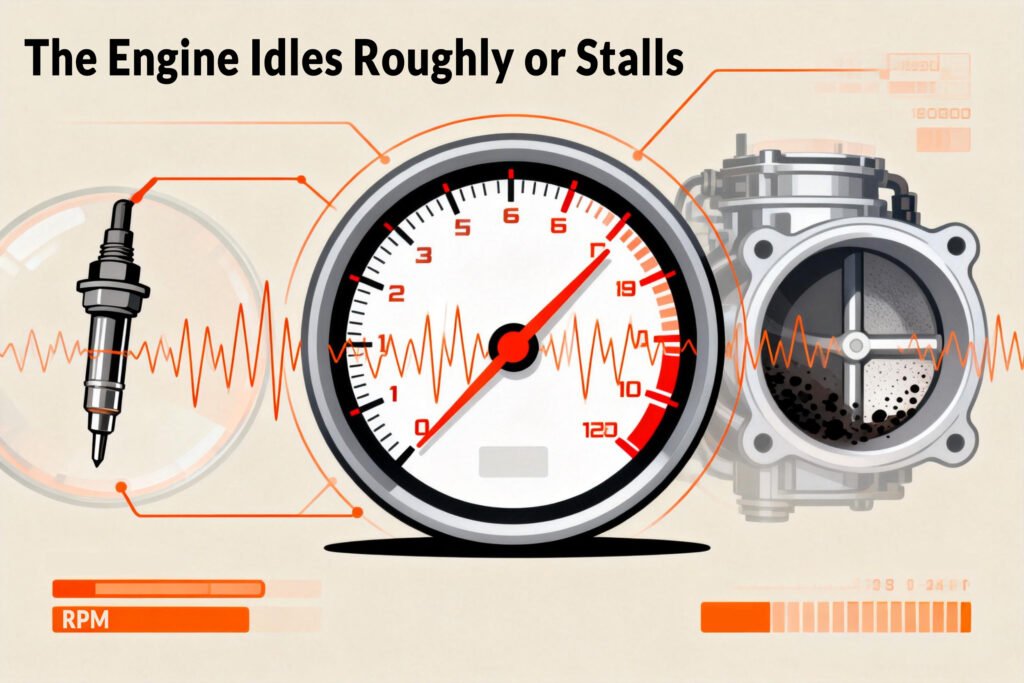
A smooth, consistent idle is a hallmark of a healthy engine. When you come to a stop, your car should maintain a steady, quiet hum without shaking, stumbling, or fluctuating RPMs. If instead you feel a persistent vibration through the steering wheel and seats, or notice the tachometer needle dipping and surging erratically while parked, you’re experiencing a classic symptom of fuel system contamination. This rough idle is your engine’s direct feedback that its delicate balance at low speed is being disrupted, often because it’s not receiving the clean, consistent fuel spray it requires.
The root cause of this unstable idle frequently lies in the accumulation of carbon deposits on critical components like the idle air control valve, throttle body, and, most importantly, the fuel injectors themselves. At idle, the engine’s computer is delivering very precise, small amounts of fuel. If an injector is clogged with varnish, it may dribble fuel unevenly or spray in an improper pattern. This leads to an imbalanced air-fuel mixture in some cylinders; some may get too much fuel (running rich), while others get too little (running lean), causing the engine to shake as it struggles to maintain a uniform rhythm.
Beyond clogged injectors, a dirty throttle body can significantly contribute to the problem. The throttle body controls the amount of air entering the engine. When carbon builds up around its plate, it disrupts the precise airflow managed by the engine computer for idling. Similarly, deposits can foul sensors like the Mass Airflow (MAF) sensor, which provides essential data for calculating fuel delivery. With faulty sensor readings, the computer is essentially making decisions based on incorrect information, leading to an erratic and unstable idle.
Ignoring a rough idle is more than just tolerating an annoyance; it can escalate into more severe issues, including unexpected stalling. As deposits worsen, the air-fuel mixture can become so lean or erratic in one or more cylinders that combustion fails during idle conditions, causing the engine to die. This is not only inconvenient and potentially dangerous in traffic, but also places additional strain on your battery and starter from repeated restarts. Furthermore, the inconsistent combustion can cause unburned fuel to wash down cylinder walls, diluting engine oil and accelerating wear on internal components.
Addressing a rough idle caused by fuel system deposits is often straightforward. For early or mild cases, using a high-quality fuel injection system cleaner that meets your manufacturer’s specifications can help dissolve fresh deposits in the fuel injectors and intake valves, potentially restoring a smoother idle. However, for persistent, severe rough idling and stalling, a professional fuel system cleaning service is typically required. This service uses specialised equipment to apply potent cleaning agents directly to the intake and fuel systems, effectively removing stubborn deposits from injector nozzles, throttle plates, and intake valves that pour-in additives cannot reach, resolving the issue at its source.
You’re Visiting the Gas Pump More Often
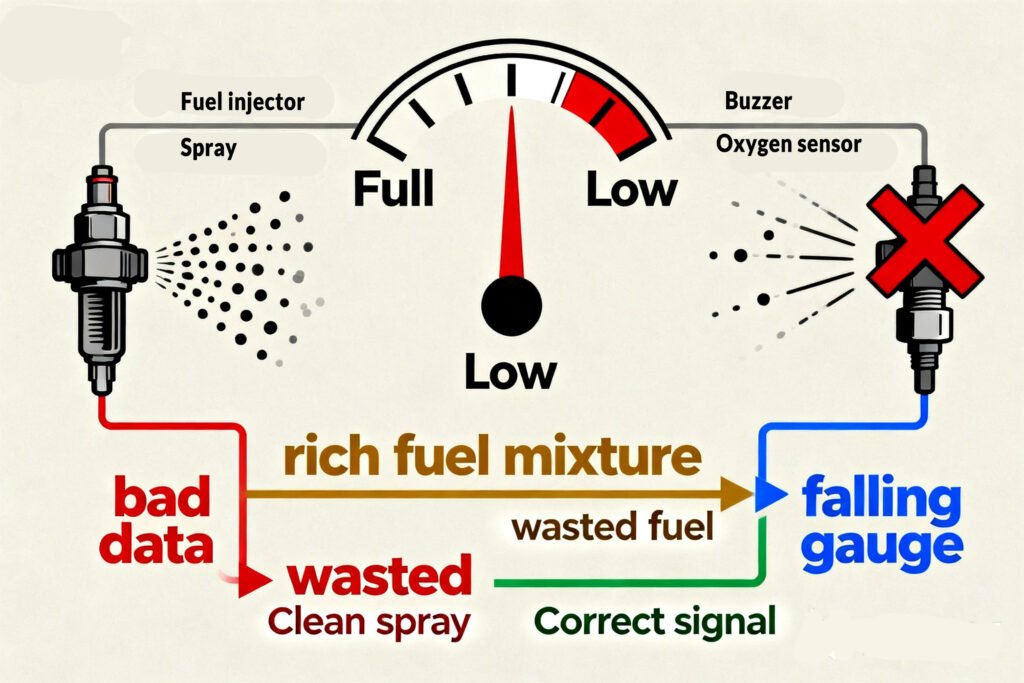
Noticing a sudden or gradual dip in your vehicle’s fuel economy is one of the most financially tangible signs of a fuel system in distress. If your calculations at the pump consistently show fewer miles per gallon than you’re accustomed to, without a change in driving habits or route, it’s a strong indicator that your engine is no longer operating at peak efficiency. This increased fuel consumption directly translates to more frequent and costly visits to the gas station, hitting your wallet where it hurts. While many factors can affect MPG, a contaminated fuel delivery system is a primary suspect, as it forces your engine to work harder and burn more fuel to produce the same amount of power.
The core of the problem often lies in the fuel injectors. When they become caked with carbon and varnish deposits, their finely engineered spray nozzles can’t atomize fuel properly. Instead of creating a fine, mist-like vapor that mixes completely with air for efficient combustion, a dirty injector may deliver a poorly dispersed stream or dribble of fuel. This incomplete atomization leads to uneven burning within the cylinder. To compensate for this inefficient burn and prevent engine misfires or hesitation, your car’s computer may instinctively inject more fuel than necessary, flooding the combustion chamber in a well-intentioned but wasteful attempt to maintain performance.
Furthermore, this contamination isn’t limited to the injectors themselves. Critical engine sensors that manage the air-fuel ratio, such as the oxygen (O2) sensors and Mass Airflow (MAF) sensor, can also become fouled by carbon soot and fuel varnish. A contaminated O2 sensor, for instance, may send a false “lean” signal to the engine computer, tricking it into continuously enriching the fuel mixture. Similarly, a dirty MAF sensor can inaccurately measure incoming air, leading to incorrect fuel calculations. In both cases, the engine is deliberately commanded to burn excess fuel based on bad data, a direct and stealthy thief of your gas mileage.
This inefficiency creates a vicious cycle. The poor combustion from dirty injectors and faulty sensor readings leads to increased carbon buildup in the exhaust system and on the sensors themselves, further degrading their performance. Additionally, the engine may experience a slight but measurable loss of power due to the inefficient burn. Subconsciously, a driver might respond by pressing the accelerator pedal further to achieve expected acceleration, which only compounds the fuel-wasting problem. The engine is now laboring under multiple handicaps: it’s receiving commands to burn extra fuel, it’s burning that fuel poorly, and it’s being asked to work harder to move the vehicle.
Reclaiming your lost miles per gallon requires cleaning the system to restore precision. For moderate efficiency loss, a concentrated dose of a high-quality fuel injection system cleaner can help dissolve deposits in the fuel injectors and on intake valves, improving spray patterns and combustion efficiency over a few tankfuls of gas. However, for a severe and persistent drop in fuel economy, a professional fuel system cleaning service is the definitive solution. This service thoroughly cleans the injectors, removes deposits from the throttle body and intake valves, and can help restore sensor accuracy, allowing your engine’s computer to once again calculate the ideal, economical air-fuel mixture for every driving condition.
Sluggish Acceleration and Hesitation
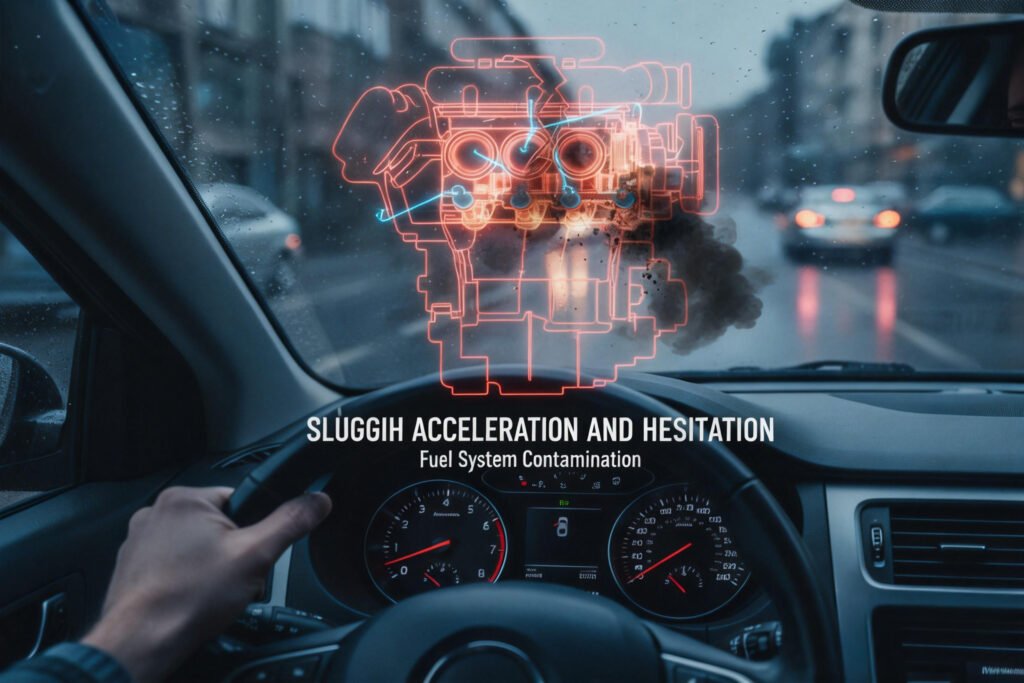
That moment of lag when you press the accelerator, a frustrating pause followed by a sluggish, unconvincing surge of powe,r is a telltale sign of a fuel system struggling under the weight of contamination. This symptom, often described as hesitation or a flat spot during acceleration, means your engine is failing to respond promptly to commands for more power. Instead of the immediate, linear thrust you expect, you experience a noticeable delay as the vehicle gathers itself, a clear indication that the precise combustion process required for strong acceleration has been compromised.
The primary culprit for this lack of power is typically clogged or dirty fuel injectors. During acceleration, your engine’s computer calls for a rapid, significant increase in fuel delivery to match the incoming surge of air. Fuel injectors coated in carbon deposits cannot respond with the necessary speed and precision. They may deliver an insufficient amount of fuel, or their spray pattern may be distorted and poorly atomised. This results in a “lean” condition in the cylinders—too much air for the available fuel leading to a weak, inefficient combustion event that simply cannot generate the forceful power stroke needed for brisk acceleration.
Compounding the injector issue is the role of dirty intake valves. In many modern direct and port fuel injection engines, fuel and detergents no longer wash over the back of the intake valves. This allows thick, crusty carbon deposits to build up on the valves themselves. These deposits disrupt the smooth, laminar flow of the air-fuel mixture into the combustion chamber. During acceleration, when airflow is high, this disruption becomes critically significant, creating turbulence and effectively “choking” the engine by restricting the volume of mixture that can enter, further starving the cylinders of the necessary charge for power.
Your vehicle’s onboard computer does its best to manage this crisis, but its responses can sometimes make the symptom feel more pronounced. As sensors detect the lean condition and misfires caused by poor fuel delivery, the engine control unit may temporarily retard ignition timing or make other adjustments to protect the engine from damage like pre-ignition or knocking. While protective, this retarding of timing directly reduces power output. The driver feels this as a further reduction in engine responsiveness, a kind of computerised power cut that exacerbates the initial feeling of hesitation, creating a layered performance deficit.
This symptom should not be ignored, as driving with consistent hesitation and power loss puts additional strain on engine components like the catalytic converter, which can overheat trying to process unburned fuel. To restore crisp throttle response, cleaning the fuel delivery path is essential. A high-quality fuel injection system cleaner can help dissolve varnish in the fuel injectors and some intake areas, potentially improving flow and spray pattern. For a comprehensive solution, especially for carbon-fouled intake valves, a professional fuel system cleaning service is far more effective. This service uses pressurised cleaning agents and specialized tools to actively remove deposits from injector nozzles and blast carbon directly off intake valves and throttle bodies, restoring the free flow of fuel and air required for instant, powerful acceleration.
Conclusion
The symptoms we’ve discussed a rough idle, declining fuel economy, and hesitant acceleration, are not separate issues but interconnected warning lights on your vehicle’s dashboard of health. Each one points to the same root cause: a fuel system compromised by carbon deposits, varnish, and grime. Recognising these signs is the first and most crucial step in proactive vehicle care, moving you from wondering about your car’s performance to understanding precisely what it needs.
Ignoring these signs leads to a downward spiral of worsening performance and increasing repair costs. What begins as a minor nuisance can escalate into damaged engine components, catalytic converter failure, and significantly more expensive repairs. However, the path to restoration is clear and effective. Whether you choose a reputable fuel injection system cleaner for mild, early symptoms or invest in a professional fuel system cleaning service for persistent problems, you are making a decision that directly restores power, efficiency, and longevity to your engine.
Ultimately, your car’s performance is a reflection of its care. By heeding these five signs and taking timely action, you do more than just fix an immediate problem you preserve the heart of your vehicle. This simple maintenance step ensures smoother drives, fewer visits to the pump, and the confidence that your car will respond reliably for miles to come. Listen to what your car is telling you; a clean fuel system is the foundation of a healthy, responsive engine.
Frequently Asked Question
1. Can I just use a fuel injector cleaner from the auto parts store, or do I need a professional service?
For mild, early symptoms (like a slight dip in MPG), a high-quality fuel injection system cleaner added to your gas tank can be an effective first step. However, for persistent, severe issues like rough idling, stalling, or pronounced hesitation, a professional fuel system cleaning service is necessary. Professional services use stronger cleaners and specialised equipment to directly remove stubborn deposits from injectors, intake valves, and throttle bodies that store-bought additives cannot fully reach.
2. Is a fuel system cleaning service safe for my engine?
When performed by a qualified technician using industry-standard equipment and procedures, a fuel system cleaning service is not only safe but highly beneficial. It reverses the performance loss caused by normal carbon buildup. The key is to ensure the service provider uses equipment that cleans without creating excessive pressure or using harsh chemicals that could damage sensitive engine sensors or components.
3. How often should I clean my fuel system?
There is no universal mileage interval, as it depends heavily on driving habits and fuel quality. Frequent short trips, stop-and-go driving, and using lower-tier gasoline accelerate deposit formation. As a general maintenance rule, many experts recommend considering a professional cleaning every 30,000 to 45,000 miles. Using a trusted fuel injection system cleaner every 3,000 to 5,000 miles (or with every oil change) can help maintain cleanliness between professional services.